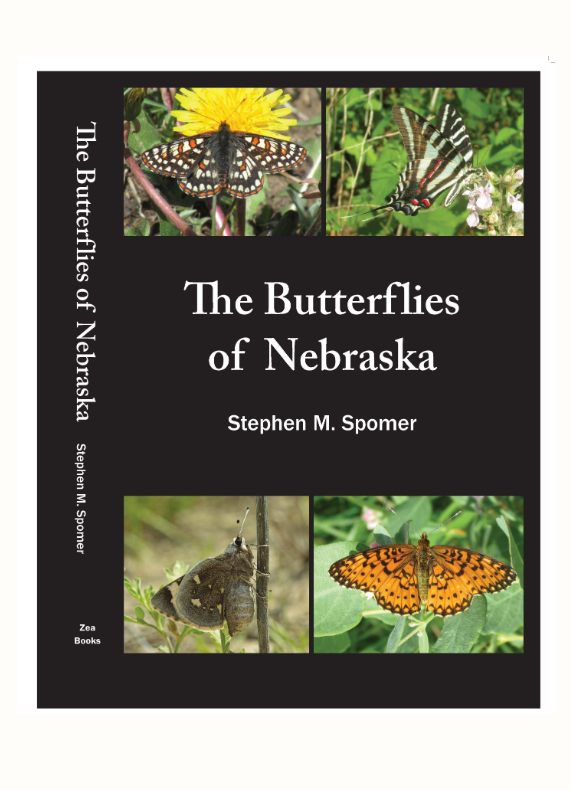
“Butterflies of Nebraska” book now available

After many years of and red tape, roadblocks and searching for funding Steve Spomer has persevered. The result is an incredible work summarizing over 120 years of butterfly research in Nebraska. This book features all Nebraska butterfly species illustrated in color, with historical perspective, ecological information and distribution maps for each.

This amazing work is available from the UNL Marketplace website in both paperback ($40) and hardcover forms ($50). A must have for your library. Get one today.

Gardening for Pollinators Zoom Presentation Thursday

What a warm winter. Got me thinking spring and plants! In that vein, Plant Nebraska (formerly NE Statewide Arboretum) is in the midst of their Winter 2026 Plant Talk Series. This week’s presentation, scheduled for Thursday at noon, is titled Gardening for Pollinators. Everybody can do a little something where they live to give our pollinator friends a helping hand.

Use the following link to sign up

PlantNebraska Plant Talks 2026

Hesperia juba rediscovered

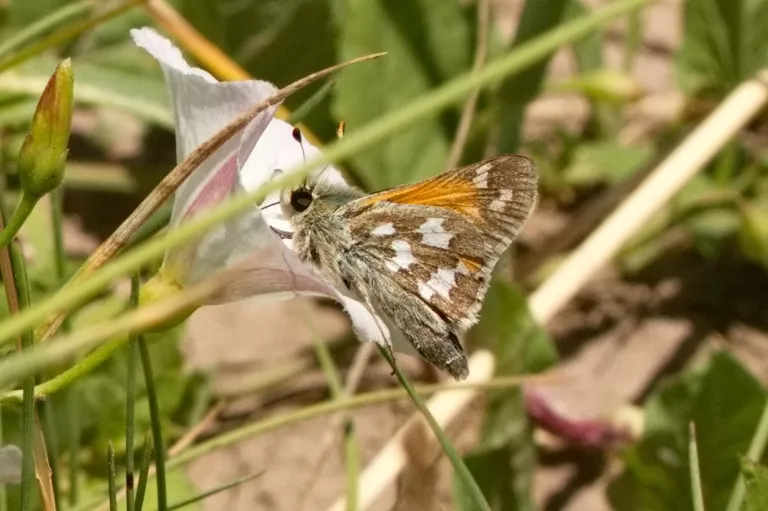
Good news and bad news! Recently I was served a helping of humble pie. Noted expert and author of “The Butterflies of Colorado” series Mike fisher was browsing our website and found some skippers we had misidentified. So, we cleaned up our misidentifications and that was the extent of the bad news. The good news was that one of the skippers I had (mis)identified as Hesperia pahaska was actually Hesperia juba. There had only been one previous record of Hesperia juba from the state – that being nearly 40 years ago (Aug 1 1985) from the North Platte area. Back in 2023 (June 30) Jonathan Nikkila photographed a skipper at Gilbert-Baker Wildlife Management Area in Sioux County. Knowing Hesperia colorado did not fly that early I assumed the next likely species would be Hesperia pahaska. We all know what they say about assume.

Hesperia juba flies in multiple broods throughout the western United States. So, we have records of both early and late summer broods in Nebraska (albeit 40 years apart). If you have pictures of any of the branded skippers from western Nebraska check them out against the annotated pictures of Juba Skippers Mike was kind enough to send. Evidently this skipper has been flying around under our noses/radar for decades.

Hesperia juba, Gilbert-Baker SWMA, Sioux Co. NE, 6-30-2023, Jonathan Nikkila
Hesperia juba male (dorsal), Mike Fisher

Hesperia juba male (ventral), Mike Fisher

New Flower Moth for Nebraska

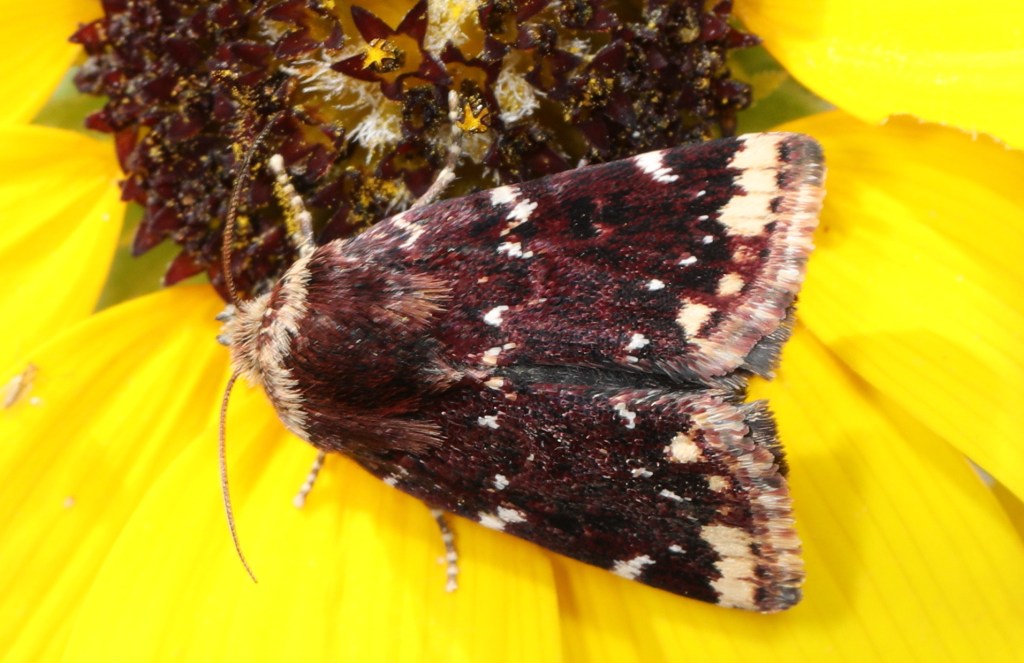
A new flower moth has been found in Nebraska. In August Brad Bolduan was visiting Valentine National Wildlife Refuge when he photographed several moths visiting sunflowers. After circulating his photos it was a consensus of several experts that the moths he found were Schinia avemensis. This moth is rarely found in the United States (two records from southern CO), with other records being from southern Canada. BugGuide reports the larval host plant to be prairie sunflower (Helianthus petiolarus) which is widespread across the western United States, including western portions of the Dakotas, Nebraska and Kansas. Many thanks to Brad for his diligence in circulating his photos and getting them identified.

Schinia avemensis, Cherry Co. NE, 8-27-2025, B. Bolduan

One More New Moth

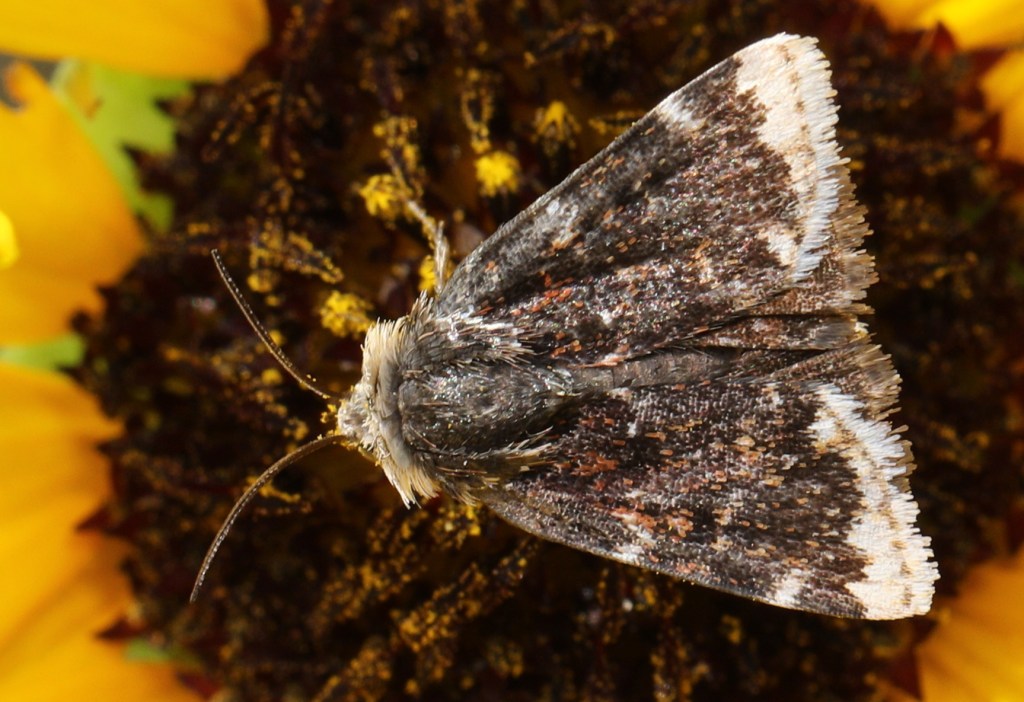
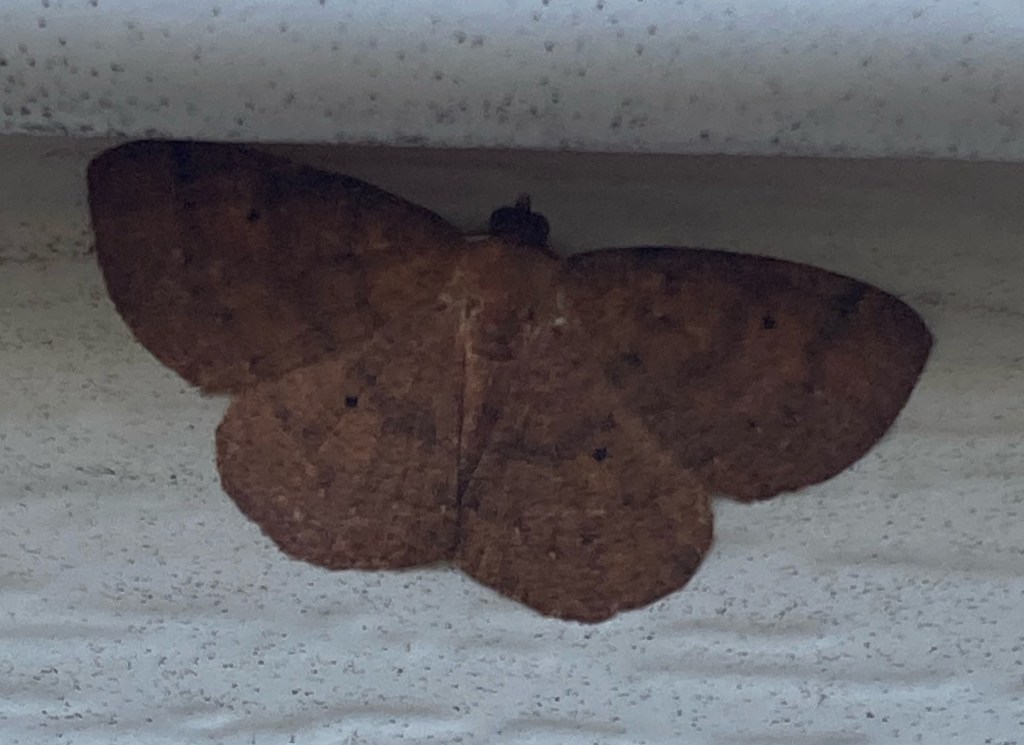
Back on October 17th Eli Weber was visiting his grandparents in Cuming County when he found an usual moth resting on their garage. After doing some research. he identified it as a Black-dotted Ruddy Moth. This id was verified by Mark Brogie, Nebraska’s resident moth expert. This is a new species for the state, the next nearest record being from northeastern Oklahoma. Larvae are reported to feed on Hollies (Ilex species), none of which are native to the state (but may be present as ornamentals). Great find Eli!!

Black-dotted Ruddy Moth, Cuming Co. NE. 17 October 2025, Eli R Weber

It’s Not Over Yet!!

The unseasonably warm late season weather has resulted in an unusual number of sightings of southern species basking in the warmth of Nebraska’s tropical weather. Several were county records, the first being a Queen from Ponca State Park (Dixon Co.) photographed on September 20 by Brett Anderson.

D. gilippus, Dixon Co. NE, 9-20-2025, Brett Anderson

Then on October 13 Colleen Childers found a Pipevine Swallowtail in Grand Island (Hall Co). This comes as Steve Spomer reported one from Lincoln on the same day.

B. philenor, Hall Co, NE, 10-13-2025, Colleen Childers

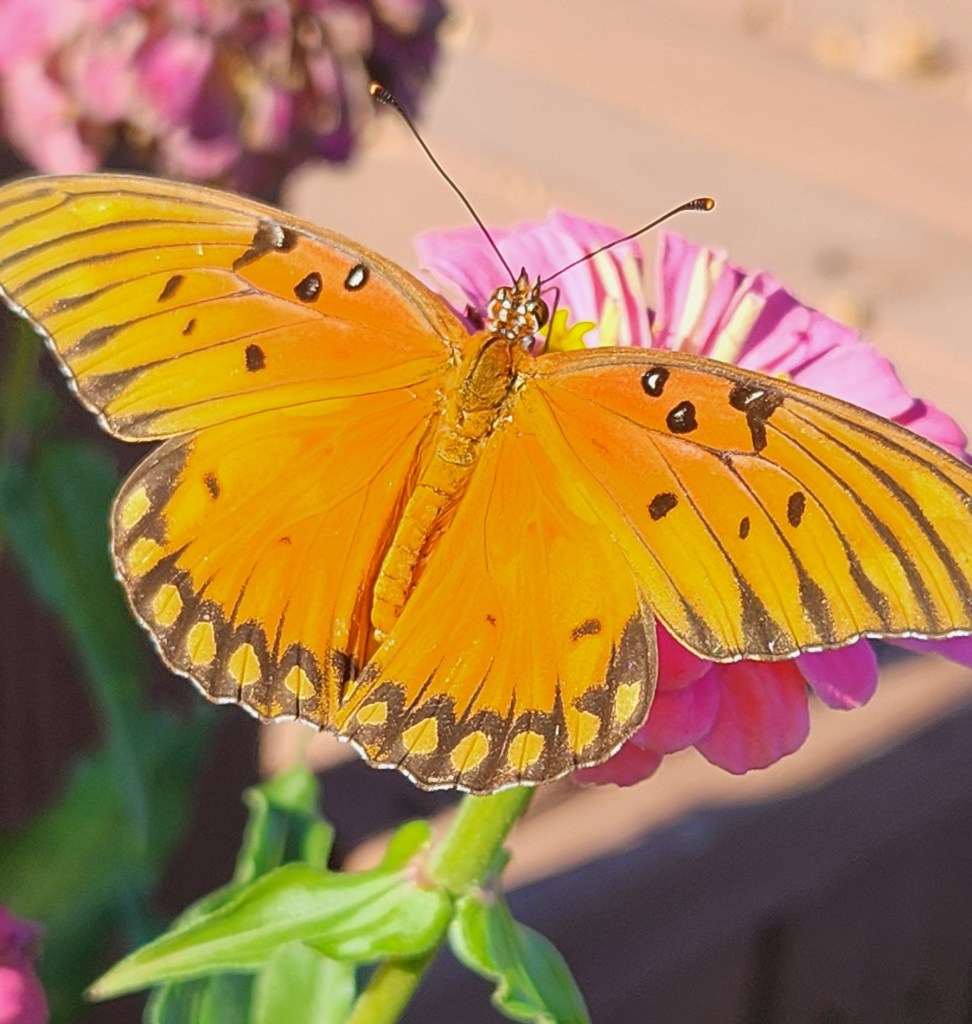
Gulf Fritillaries have also been reported from Hall (Colleen Childers), Buffalo (Jennifer Dankert) and Hamilton (Chris Helzer) Counties in the past week, with Chris’s Hamilton County finding being a county record.

D. incarnata, Hamilton Co. NE, 10-17-2025, Chris Helzer

All of these coming on top of uncommon findings here in central (Buffalo Co.) Nebraska. Monarchs are still common in Elm Creek as well as singles of Gulf Fritillaries, Cloudless Sulphurs and Eufala Skippers – all species seen here infrequently.

So if you still have nectar sources in your area check them out. The season is winding down but amazing things are still being found.

More Moths New to Nebraska

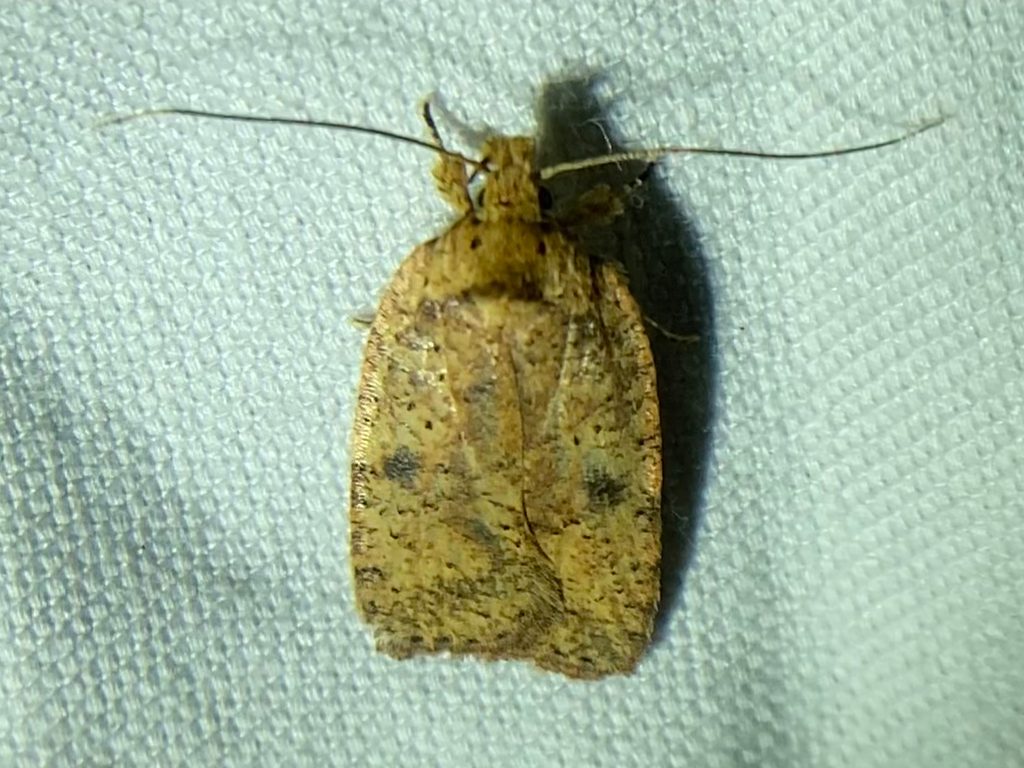
Three more moths have been added to Nebraska’s moth list. On September 12 Eli Weber attracted a Thelma’s Agonopterix to lights at Elmwood Park in Omaha. This moth has been found in the eastern United States with central Iowa being the previous westernmost record. It’s larval hostplants are unknown.

Thelma’s Agonopterix, Douglas Co. NE, 9-12-2025, Eli Weber

Then on September 22 Eli was running lights at Pioneer Park in Lincoln when he found/photographed a White-spotted Chionodes. This moth has been found from the East Coast westward into Oklahoma, Texas and now Nebraska. Larvae are leaf skeletonizers feeding on Oaks.

White-spotted Chionodes, Lancaster Co. NE, 9-22-2025, Eli Weber

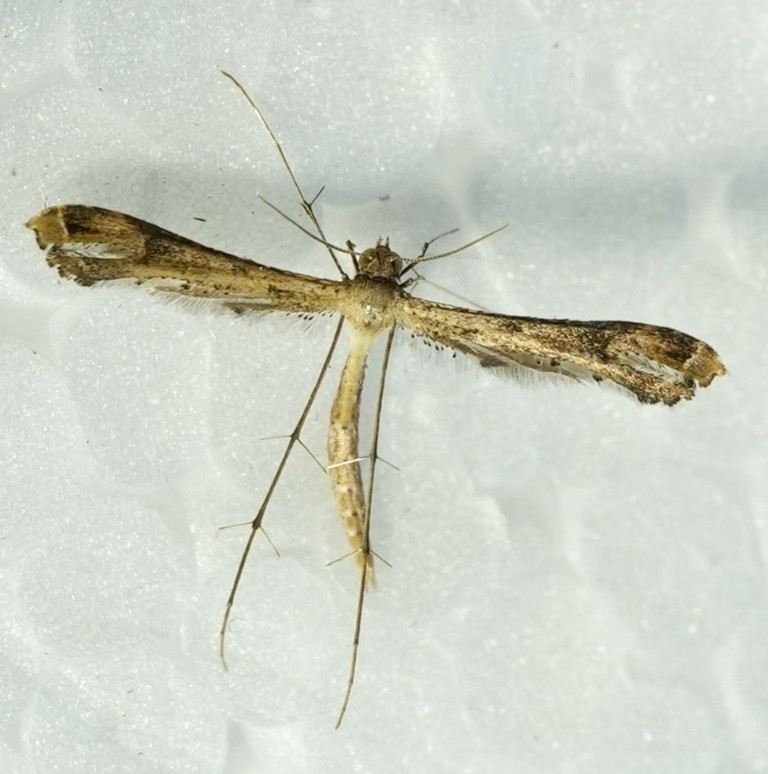
On October 8 Elizabeth Hilkermann found a Sri Lanka Plume Moth at her home in southern Lancaster County. This species has been found in the southeastern United States. The next nearest record is from central Missouri making this a significant range extension to the northwest. Larvae of plume moths feed on herbaceous plants. Hostplant preference(s) of this particular species are unknown.

Sri Lanka Plume Moth, Lancaster Co NE, 10-8-2025 Elizabeth Hilkemann

Thanks to Eli and Elizabeth for documenting the diverse Lepidopteran fauna found in our state.

4-H Records from the State Fair

Steve Spomer (who judges insect collections at the state fair) forwarded me the following new records from the fair held earlier this month. Unfortunately, most of these records come to me with incomplete data, be it dates or specific localities. So, while almost certainly valid, they are recorded on our maps with a lighter shade of green

Automeris io: Grant Co., Jett Burgess

Hyalophora cecropia: Grant Co., Jett Burgess

Ceratomia hageni: Grant Co. Jett Burgess

Asterocampa celtis: Grant Co., Jett Burgess

Hyles euphorbiae: Keith Co., 7/15/25, Jacob Fote

Ceratomia amyntor: Madison Co., 5/3/couldn’t see year, Ezra Ohnesorg

Catocala illecta: Madison Co., 8/3/23, Garrett Ohnesorg

Nymphalis antiopa: Polk Co., 6/1/25, Hunter Niedbalski

Limenitis archippus: Colfax Co., 8/7/24, Kara Eisenmann

Papilio polyxenes: Colfax Co., 8/20/23, Kara Eisenmann

Many thanks to these budding entomologists for their contributions.

Another White M Hairstreak

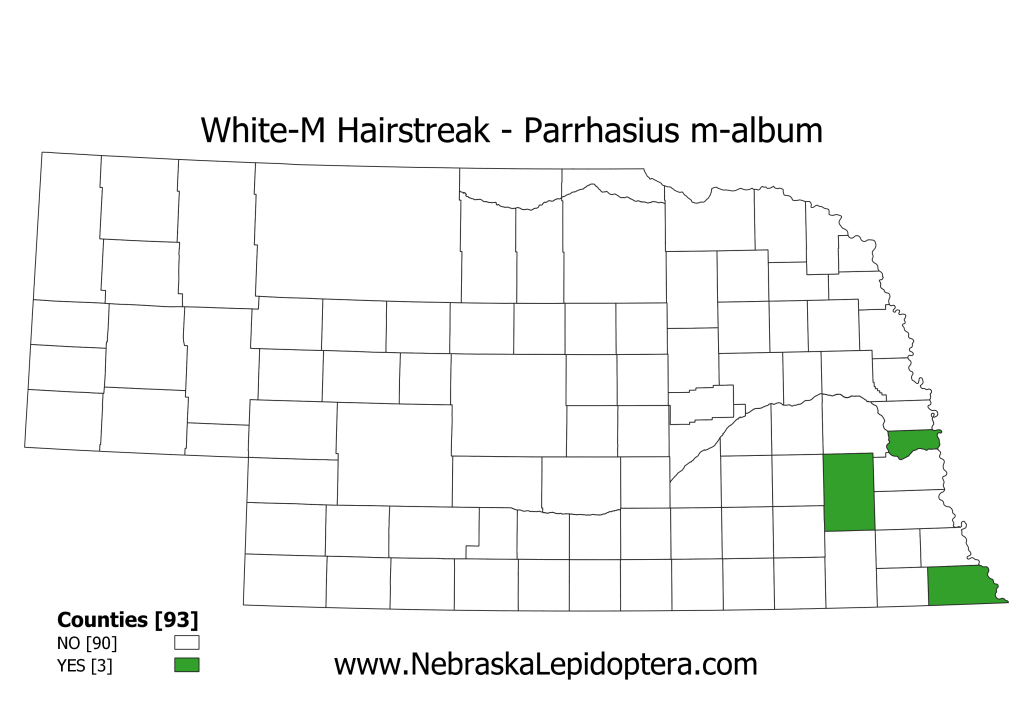
Back in August (13th) Eli Weber was camping at Indian Cave State Park in Richardson County when a White M Hairstreak came to visit him, perching on his tent. This is the fifth record and third locality for this butterfly in the state, the other two being in Bellevue and Lincoln. Three records are from August with one each from June and October. Steve Spomer has reported that there is a spring brood in the Kansas City area which we have not yet seen in Nebraska.

This butterfly is widely distributed in eastern North America, with breeding populations being documented nearby in Iowa and Missouri. It’s larvae feed on oaks (Quercus). It’s status (stray, breeding stray or resident) in Nebraska is unknown at this time. At first glance it might be mistaken as being a Gray Hairstreak. So, if you live in/visit southeastern Nebraska and are near oak trees be aware of the possibility of finding it. With so few records each sighting is significant. Great find Eli!!

White-M Hairstreak, Richardson Co, NE 13 Aug 2025, Eli Weber