Six Moths New to Nebraska

On July 14-16 Eli Weber and Tony Palmer set up lights at Neale Woods (which straddles Douglas and Washington Counties) to see what insects might be afoot. Their efforts resulted in finding six moths previously unreported from the state.

They found a Hollow-spotted Plagodis whose larvae feed on various hardwoods. This is the westernmost US record of this species.

Hollow-spotted Plagodis, Washington Co, NE, 7-14-2025, Eli Weber

They also found Nason’s Slug Moth which is the northwestern-most North American record for this species. Of the larval host plants listed, Hickory is the most likely utilized by larvae in our area.

Nanson’s Slug Moth, Washington Co. NE 7-14-2025, Eli Weber

Next they found a Multiform Leafroller. The next nearest record is from Illinois. Larva are reported to feed on Apple (Malus sp.) and Cherry (Prunus sp.)

Multi-form Leafroller, Douglas Co. NE 7-16-2025, Eli Weber

The next moth is a member of a species currently undergoing a revision (the Sonia canadana complex). However no previous records of anything falling into this complex have been reported from Nebraska. BugGuide reports the species to be eastern in distribution with larvae feeding on asters.

Sonia canadana complex, Douglas Co. NE 7-16-2025 Eli Weber

The remaining two lack common names. The first is Dichomeris setosella. It is eastern in distribution (the next nearest records are from Missouri and Minnesota). It’s larvae reportedly feed on numerous plants of which Eupatorium (Boneset), Eutrochium (Joe-pye Weed), Verbesina (Crownbeard), Veronia (Hornbeam) are found in our area.

Dichomeris setosella, Douglas Co. NE 7-16-2025 Eli Weber

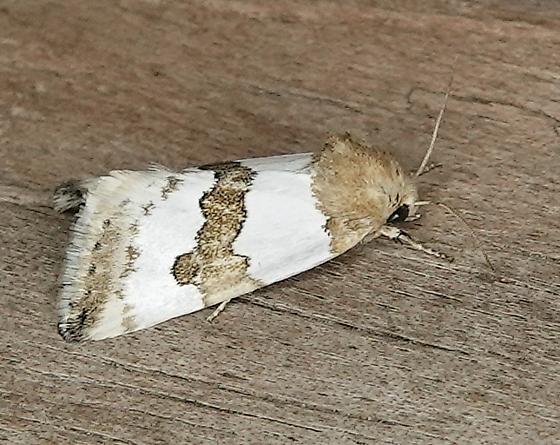
The last is Pubitelphusa latifasciella. It is a leaf roller whose larvae feed on oaks (Quercus sp.). Nearest records are from central Missouri or northeastern Iowa.

Pubitelphusa latifasciella, Washington Co. NE, 7-14-2025 Eli Weber

Six new species in a couple of evenings is a huge accomplishment. Many thanks to Tony and Eli for their efforts and sharing their results.

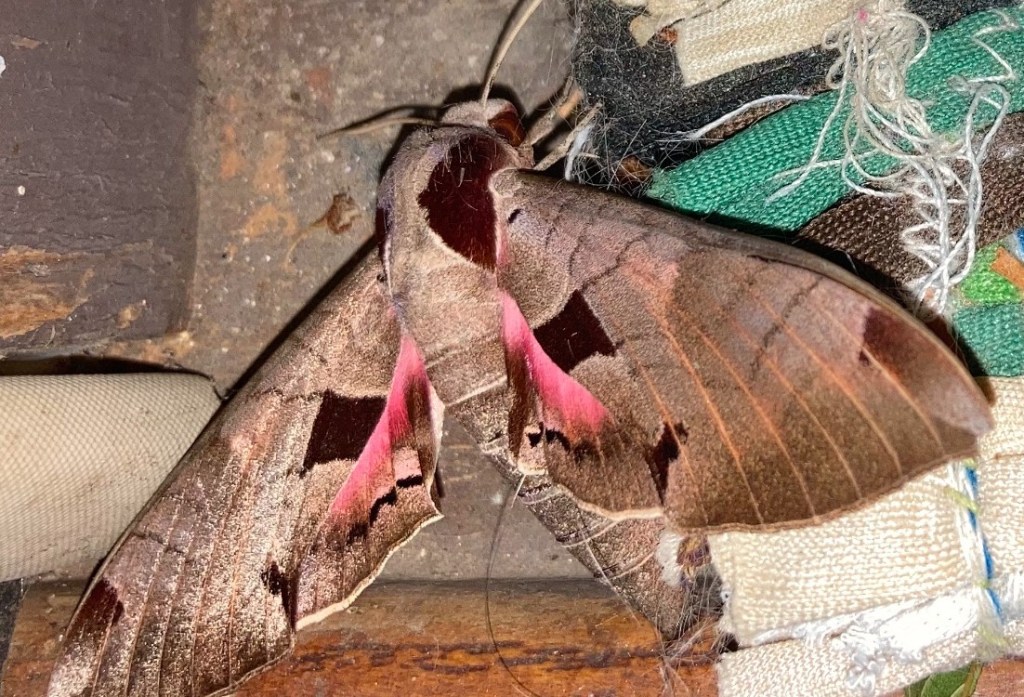
Achemon Sphinx from Nance County

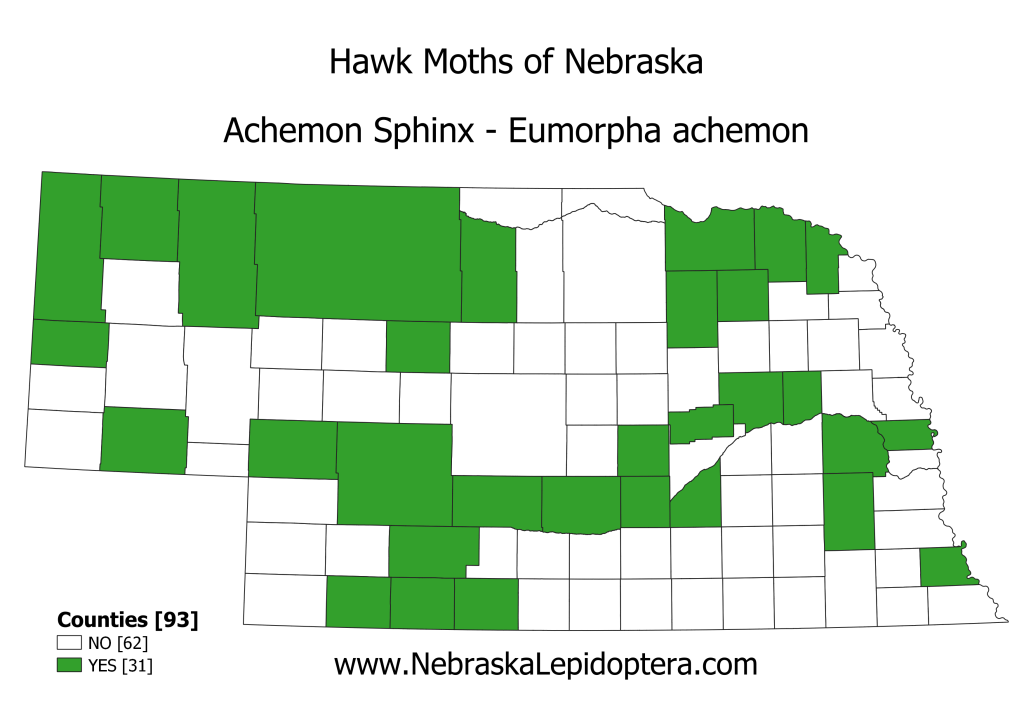
Back in July (10th) Dianne Miller found an Achemon Sphinx in Genoa. Larva of this attractive moth feed on Grapevine (Vitis) which grows wild statewide. The moth is also found statewide but is recorded from only a third of the counties. So, citizen science opportunities abound. Great job Dianne!

Achemon Sphinx, Genoa, Nance County, NE, 10 July 2025, D K Miller

Two Moths New to Scotts Bluff County

Master Naturalist Colin Croft regularly sets up lights and bait at night in the Wildcat Hills to see what insects he might attract. On July 21 a Joined Underwing was attracted to his bait. Larvae of this species feed on cottonwoods and willows and while it is widespread across the state its habitat becomes scarcer the farther west one travels. So definitely a good find for western Nebraska.

Joined Underwing (C. junctura), Scotts Bluff County NE. 21 July 2025, Colin D Croft

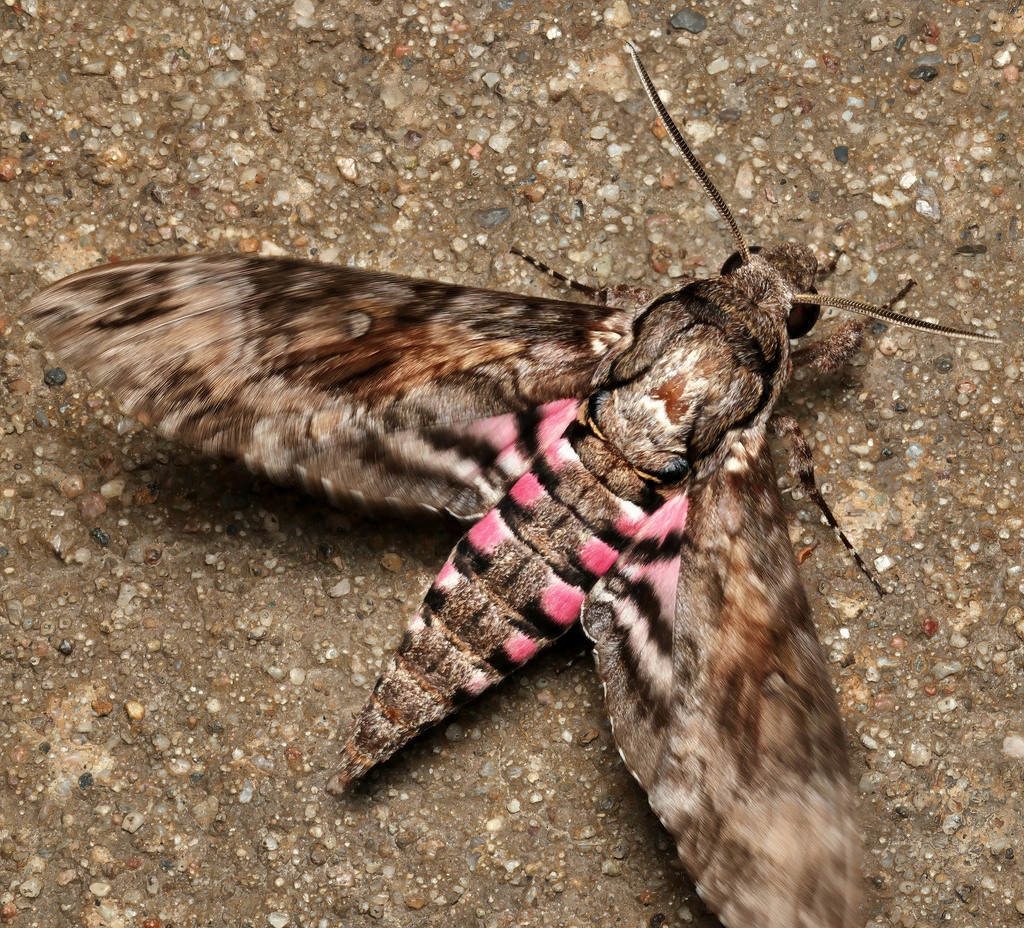
The next night he attracted a Pink-spotted Hawkmoth to his lights. This uncommon stray from more southerly climes has been found in only 13 Nebraska counties, all but Colin’s from the eastern half of the state.

Pink-spotted Hawkmoth (A. cingulata), Scotts Bluff Co. NE, 22 July 2025, Colin D Croft

Thank you Colin – great job!

2025 Niobrara Valley Preserve Butterfly Count

On June 30 six intrepid observers (Chris Helzer, Noelle Schuman, Kojo Baidoo, Eric Strehlow, Jen Corman and Neil Dankert) set out on the 38th annual Niobrara Valley Preserve Butterfly Count. The weather started out a little on the cool side (temps in the low 70s) when the count began at 9:45 am but was ideal (mid 80s with a gentle breeze) when we wrapped up around 3:15 pm. The group counted 214 individual butterflies from 27 different species. Judging from the butterflies found (and not found) the season appeared to be a week or two behind a “normal” year, greatly affecting the species sighted. Wood Nymphs and Regal Fritillaries that we would normally expect to see were entirely absent (having not yet emerged?) while we found several Northern Cloudywings which have usually flown and disappeared by late June. Little Wood Satyrs, whose numbers are usually diminishing by late June/early July, were abundant. Every year is an adventure!!

This year we set out traps baited with rotting fruit the evening before the count to see what moths we could attract. These were left out for the duration of the count the next day and attracted several butterfly species not otherwise observed that day (Mourning Cloaks, Hackberry Emperors and Eastern Commas) as well as many additional Red Admirals and Wood Satyrs. These traps are especially effective in attracting “woodland” butterflies who are adept at finding and feeding on sap flows and rotting fruit. These traps were a great addition to our visual count we’ll likely continue to use in the future.

As mentioned earlier, many of the NENHP (Nebraska Natural Heritage Program) species of concern we normally encounter had not yet begun flying. But we did sight the following: Long Dash Skippers (5), Crossline Skipper (1), Northern Broken Dash Skippers (2), Two-spotted Skipper (1), Banded Hairstreaks (5), Coral Hairstreak (1), Eyed Browns (5) and Monarch (1).

Other species sighted were Silver-spotted Skippers (21), Northern Cloudywings (2), Checkered Skippers (2), Peck’s Skipper (1), Tawny-edged Skipper (3), Delaware Skipper (2), Orange Sulphur (10), Acadica Hairstreak (1), Gray Hairstreak (1), Eastern Tailed Blue (6), Great Spangled Fritillaries (15), Viceroy (1), Hackberry Emperor (1), Red Admirals (43), Mourning Cloaks (2), Eastern Comma (1), Gorgone Checkerspot (6), Pearl Crescents (5) and Little wood Satyrs (65).

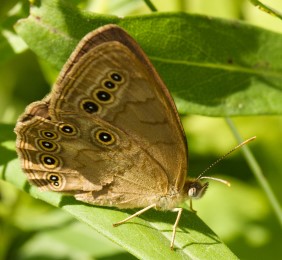
Eyed Brown, Niobrara Valley Preserve, Brown Co., NE, Jonathan Nikkila

Every count is a snapshot in time, influenced by numerous factors (weather and “seasonality” among them). This makes comparing counts difficult. But over time each count adds to our long-term database of knowledge. Thirty-eight consecutive count years is quite an achievement. Thanks to all who have participated over the years!!

Mothapaloosa

This year’s Niobrara Valley Preserve Butterfly Count was held June 30. Chris Helzer, Eric Strehlow, Mark Brogie, his wife Ellen and myself showed up a day early to check out the local nightlife. Mark and Eric set up their sheets and mercury vapor lights and Eric and I drove around and set up about 20 of his bait traps. Then we sat back and waited for nightfall. Just before dark a short light shower rained on our parade, but we persevered. Boy were we rewarded!! That night Mark stayed up till 4:00 am taking pictures of moths. He found around 120 species, over 90 of which had not been recorded from the Preserve. We found two different Saturnids (Io and Polyphemus), 9 species of Sphinx Moths and four different Underwings. Clinton’s Underwing, generally considered rare, was numerous. Mark has posted his findings on BugGuide. To view his amazing list go to BugGuide.net. Then click the Search box in the upper right hand corner. On the next page click on the Advanced Search option. Select Nebraska from the dropdown options and type Brown into the County box. The first 160+ photos are from June 29-30. Truely a night to remember. My personal favorite is Schinia simplex, a small flower moth whose larvae feed on Bush Morning Glory flowers. View Mark’s amazing photo gallery, select a favorite and send us a comment letting us know your selection.

Io Moth, Niobrara Valley Preserve, Brown Co., NE, 6-30-2025, Mark Brogie

Schinia simplex, Niobrara Valley Preserve, Brown Co., NE. 6-30-2025, Mark Brogie

Hobomok Skipper in Custer County

Back on in mid-June (13th) Steve Spomer stopped by Victoria Springs SRA where he found three Hobomok Skippers (previously unreported in Custer County). While not uber-rare they are uncommon in central Nebraska. Good find Steve!!

With the help of Mark Brogie I’ve been updating our NE Moth spreadsheet. Watch for posts in the near future when it is completed and about our annual Lepidoptera outing at the Niobrara Valley Preserve.

Hobomok Skipper, Sioux County, NE., Jonathan Nikkila

New Moth For State

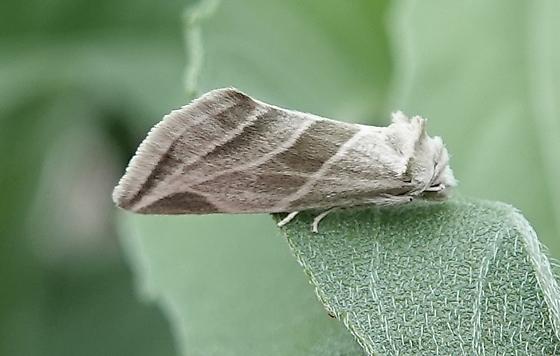
Congrats to Elizabeth Hilkemann, a grade school insect enthusiast, who photographed a Yellow-lined Owlet Moth in southern Lancaster County. This is the first report of this species in the state. Literature lists Willows (Salix sp.) as a likely larval host plant. Mom Laura reports willows to be common in the area. Willows are one of the three keystone genera (along with oaks and cherries) the Nebraska Statewide Arboretum considers to be essential to healthy ecosystems in our area. These “trees” were featured on one of their spring plant talks available online. This is a great illustration of the interaction between plants, insects and other organisms (birds, bats, other insects) in turn feeding on them. Thanks to the Hilkemanns for sharing their observation.

Yellow-lined Owlet (Colobochyla interpuncta), Lancaster County, Nebraska, 28 May 2025, Elizabeth Hilkemann

More New Moths (Again)

James Adams contacted me regarding some additional moths they had found on their road trip through Nebraska last summer (see Feb 6 post). As a result of his previous communication five new moth species were added to Nebraska’s known moth list. In his latest communication five more species are added to our state list. All were found south of Chadron in Dawes County.

James reported finding Plagiomimicus tepperi (sorry, no common name) on his trip through Nebraska. Looking at the MPG map I discover Colin Croft had found it previously in Scotts Bluff County. This distinctive species is primarily southwestern in distribution with the Nebraska records being the farthest north in the central United States. Its larvae are reported to feed on Tasselflower Brickellbush which is also restricted to the western portions of our state.

Plagiomimicus tepperi, Scotts Bluff Co. NE, 7/21/2020 Colin D Croft

The second finding is a Pale Glyph Moth. This moth is found from coast to coast but is more northerly in distribution. Larvae feed on various grasses.

The next new species was the Dark-spotted Looper Moth. This species is found from the Atlantic coast west to Montana and again in more northerly in distribution. Larvae are thought to feed on a variety of plants.

Dr. Adams also reported finding Abagrotis forbesi south of Chadron. This would be the easternmost record of this western species. In more westerly portions of its range, larvae are known to feed on Serviceberries (Amelanchier sp.), several species of which can be found in Nebraska’s Pine Ridge.

The final “new” species Dr. Adams reported in this correspondence is Schinia chryselloides which again, unbeknownst to me, Colin had found previously in Scotts Bluff County. Members of the genus Schinia , also known as flower moths, are so named because they lay their eggs (and their larvae feed on) flowers, with each species having a specific (or closely related group of) plant(s) as their host. S. chryselloides preferred host plant is Hairy Golden Aster Heterotheca villosa.

Schinia chryselloides, Scotts Bluff Co., NE, 7/19/2021, Colin D Croft

Thanks again to Dr. Adams and Colin Croft for their ongoing efforts exploring the moth fauna of the western reaches of our state. Nebraska’s moth species now numbers 1495 species.

Good News (sorta) and Trees Useful to Lepidoptera

WWF has reported that the number of Monarch butterflies overwintering in Mexico this past winter (2024-2025) has roughly doubled from the previous year (2023-2024). But before we pop the champagne corks realize that 2023-2024 population was the second lowest on record, so the bar was set pretty low. Read all about it here.

Also in case you missed it here is a link to yesterday’s Nebraska Statewide Arboretum presentation on the importance of Oaks, Willows and Cherries/Plums to our Lepidopteran friends. And in case you’re not into larvae chewing on your landscape but instead prefer birds, realize that these plants and the larvae that feed on them power our ecosystems. The presenters cover species of these three groups “native” to our area and offer options for plantings suitable for multiple situations you might find at your locality. Entertaining and informative. Check it out.

Exit mobile version