

James Adams contacted me regarding some additional moths they had found on their road trip through Nebraska last summer (see Feb 6 post). As a result of his previous communication five new moth species were added to Nebraska’s known moth list. In his latest communication five more species are added to our state list. All were found south of Chadron in Dawes County.
James reported finding Plagiomimicus tepperi (sorry, no common name) on his trip through Nebraska. Looking at the MPG map I discover Colin Croft had found it previously in Scotts Bluff County. This distinctive species is primarily southwestern in distribution with the Nebraska records being the farthest north in the central United States. Its larvae are reported to feed on Tasselflower Brickellbush which is also restricted to the western portions of our state.

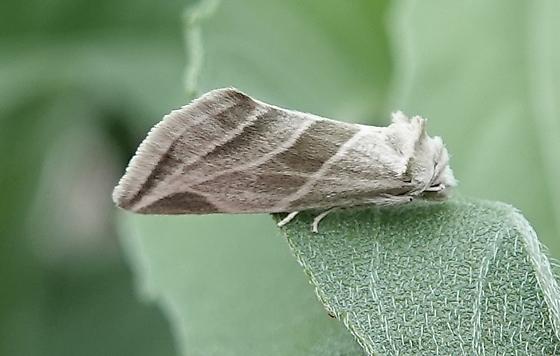
The second finding is a Pale Glyph Moth. This moth is found from coast to coast but is more northerly in distribution. Larvae feed on various grasses.
The next new species was the Dark-spotted Looper Moth. This species is found from the Atlantic coast west to Montana and again in more northerly in distribution. Larvae are thought to feed on a variety of plants.
Dr. Adams also reported finding Abagrotis forbesi south of Chadron. This would be the easternmost record of this western species. In more westerly portions of its range, larvae are known to feed on Serviceberries (Amelanchier sp.), several species of which can be found in Nebraska’s Pine Ridge.
The final “new” species Dr. Adams reported in this correspondence is Schinia chryselloides which again, unbeknownst to me, Colin had found previously in Scotts Bluff County. Members of the genus Schinia , also known as flower moths, are so named because they lay their eggs (and their larvae feed on) flowers, with each species having a specific (or closely related group of) plant(s) as their host. S. chryselloides preferred host plant is Hairy Golden Aster Heterotheca villosa.

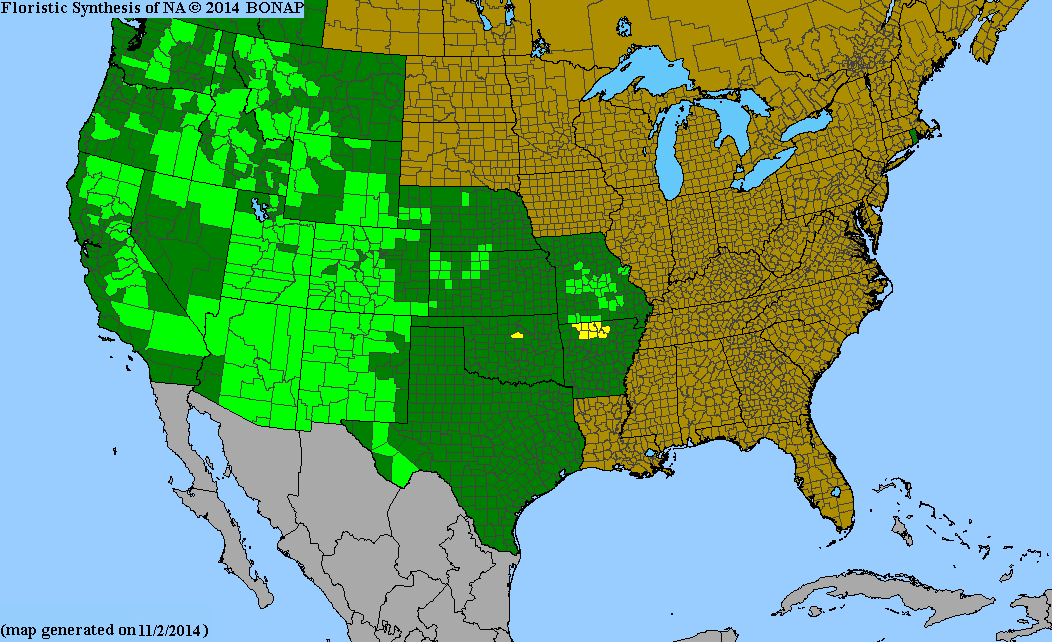
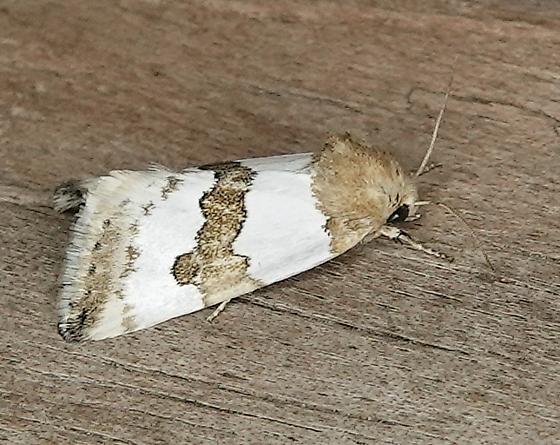
Thanks again to Dr. Adams and Colin Croft for their ongoing efforts exploring the moth fauna of the western reaches of our state. Nebraska’s moth species now numbers 1495 species.