
Over this past summer Tony Palmer conducted insect surveys at Fontenelle Forest and Neale Woods. He was assisted by Eli Weber who reviewed over 1500 photos of nocturnal Lepidoptera (moths). Eli winnowed those 1500+ pics to eight species possibly new to Nebraska. Mark Brogie went through that list of eight found that three could not be definitively identified without physical specimens to examine in detail. The remaining five are listed below.
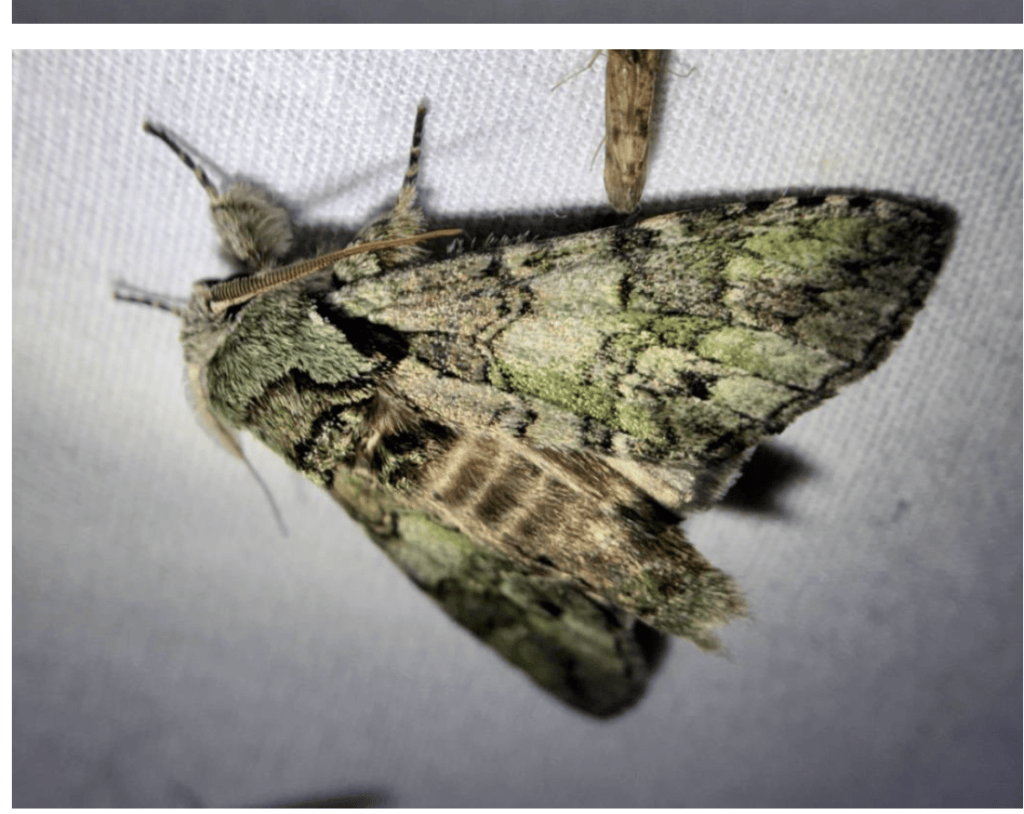
The cutest of the five (my opinion) is Macrurocampa marthesia, the Mottled Prominant in the Notodontidae family. It is native to most of eastern North America, with the nearest record being from southeastern Iowa. Larvae feed on various trees including Walnut (Juglans sp), and some Oaks (Quercus sp).
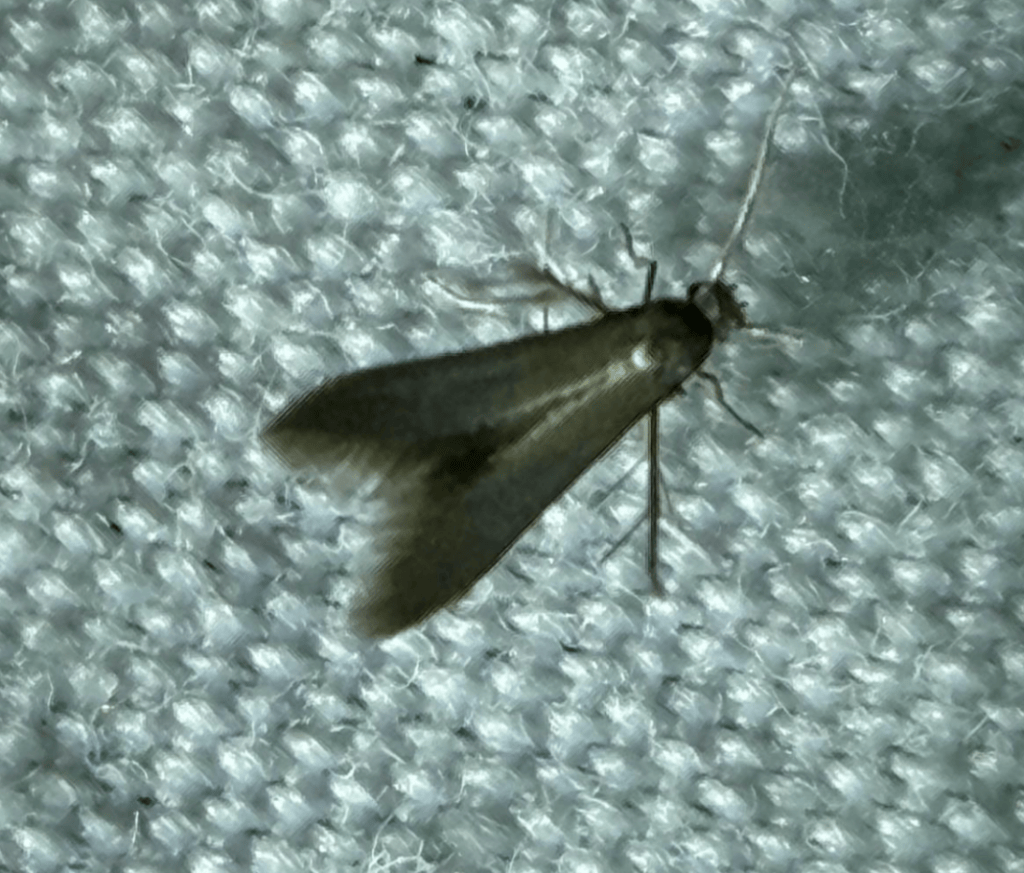
Another new finding for the state was Schreckensteinia erythriella. It is a member of a moth Family (Schreckensteiniidae) which I’d never heard of before (which is not to surprising). It ends up that in North America the Family and Genus is represented by only three species. Larvae of this species feed on the fruit and racemes of sumacs (Rhus sp.)
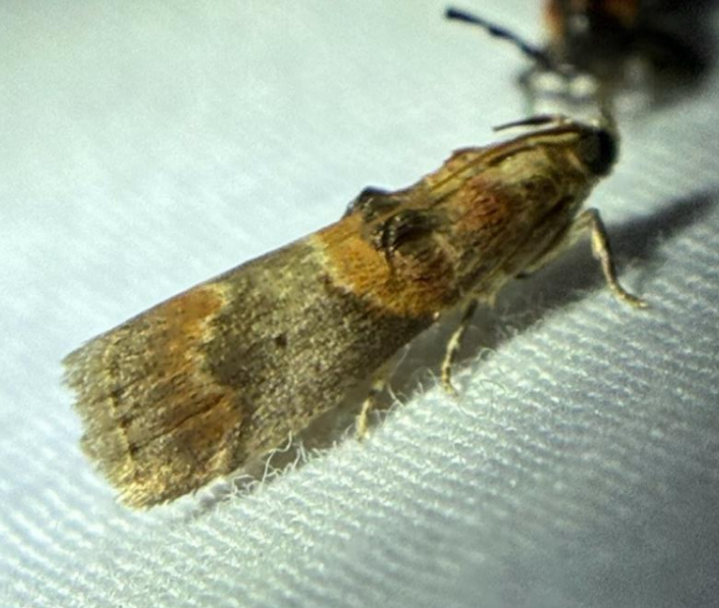
Another Fontenelle Forest discovery was the Hickory Leafstem Borer (Acrobasis angusella). As the name implies it feeds on hickories and is widespread across the eastern United States, the record nearest Nebraska being from central Missouri.
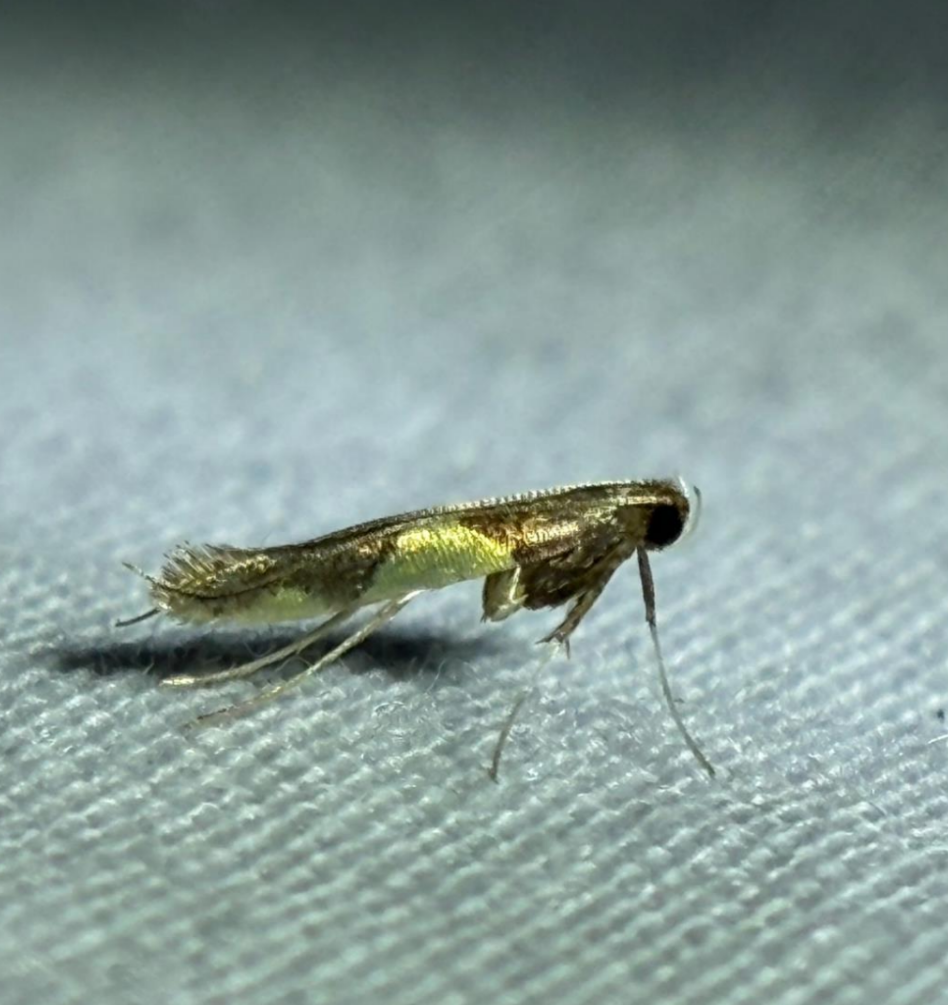
Next up is Caloptilia bimaculatella (sorry, no common name). Larvae of this attractive (but little) moth feed on Maples. It is widely distributed across the US east of the Mississippi River. The records closest to Nebraska are from western Illinois and eastern Texas, making this a really good find.
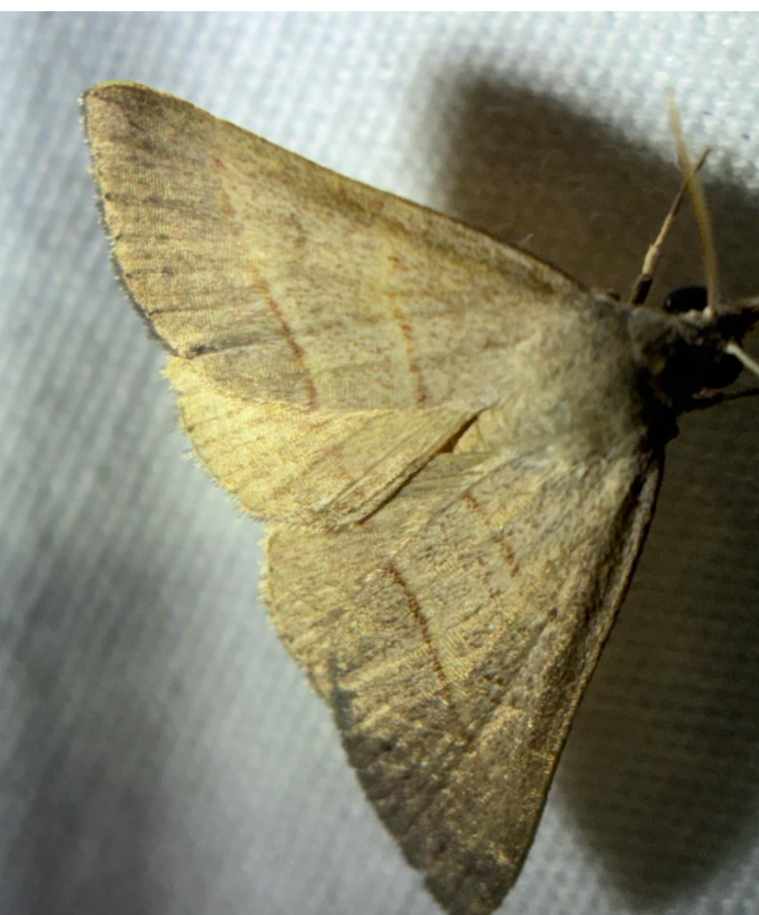
Perhaps the most intriguing find was Hemeroplanis immaculalis. According to Moth Photographers Group this moth, found in Nebraska at Indian Cave State Park, has two disjointed populations, one in the Appalachians (South Carolina and Tennessee) and the other in western portions of Texas and Oklahoma. These might yet prove to be separate species. In either case neither of these are anywhere close to Nebraska but the habitat at Indian Cave probably more closely resembles that of the eastern population. Nothing is known of the early stages.
Many thanks to Tony and Eli for the countless hours they spent on these projects. We are the beneficiaries of their labors.