
Every year several individuals I know repeatedly make amazing butterfly and moth finds. When making inquiries I often find their discoveries were attracted to baits. And every year I tell myself I’m going to try that. Bait recipes are often closely guarded but Colin Croft has graciously agreed to share his “recipe”. His “guest blog” follows –
A Moth Baiting Mix for Nebraska Naturalists
Moth “sugaring” or “baiting” — painting a fermented, sweet mixture onto tree trunks to attract noctuid moths and others — is an old technique with a long history among moth enthusiasts. The recipe below is not my own invention; it’s an amalgam of the most common ingredients appearing in mixes shared online by baiting enthusiasts, with proportions drawn largely from a Wild Ones recipe that has circulated widely in the mothing community. I’ve adapted it to what I had on hand and to a storage method that works well for repeated use in the field.
The Mix
10 lbs overripe bananas (peeled)
10 lbs dark brown sugar
20 oz molasses
5 bottles beer
½ cup rum
up to 48 oz red grape juice*
up to 32 oz apple juice or applesauce*
*Add gradually to reach desired consistency (see below)
Combine everything except the grape/apple juices (or applesauce) in a 5-gallon bucket with a tight-fitting lid. A drill-mounted paint mixer makes the job much easier and cuts mixing time considerably (and you’ll want to be mixing it occasionally over its ‘lifetime’). Then add the grape juice and apple juice (or apple sauce) together in
equal proportions, a cup or two at a time, until you reach your desired consistency. You may not need the full amounts listed, and consistency will change a little over time.
The mix benefits from at least several days of fermentation before first use — leave it loosely covered at warm temperatures and stir occasionally. Your nose will tell you when its sufficient “ripe”; it should smell like overripe fruit and stale beer — funky, sweet, and faintly alcoholic — but not like vinegar or anything actively putrid.
If your batch ends up too thin after the juices are added, a small amount of xanthan gum — a flavorless, food- safe thickener — works well for adjusting small amounts ladled out for individual nights without having to rework the whole batch; mashed overripe banana is another good thickener that stays true to the recipe. If it’s
too thick, simply stir in a splash of additional juice, beer, or cheap red wine until you reach the right consistency.
The sealed 5-gallon bucket keeps the mix contained and makes the setup reasonably portable — easy to take along to a mothing location away from home with minimal mess. I’m currently still using mix made in 2025, now well over a year old, stored in a sealed bucket. It smells powerfully fermented and appears to work fine.
The high sugar and alcohol content seems to prevent spoilage in any conventional sense, though I have no controlled comparison to tell you whether fresher mix would outperform aged mix. I’d suggest using your nose and common sense: if it smells actively rotten rather than fermented, start a new batch.
Most baiters simply smear or paint the mix directly onto tree trunks — effective and straightforward. I’ve moved to a method that reduces mess and adds flexibility. I screw a small screw into the interior wall of the bucket near the top, then clip a strip of thick cloth (cut from a washcloth or old clothing) to a steel clamp. The strip hangs inside the bucket between uses, ready to go for your next baiting night, but not making a mess in
the mean time.
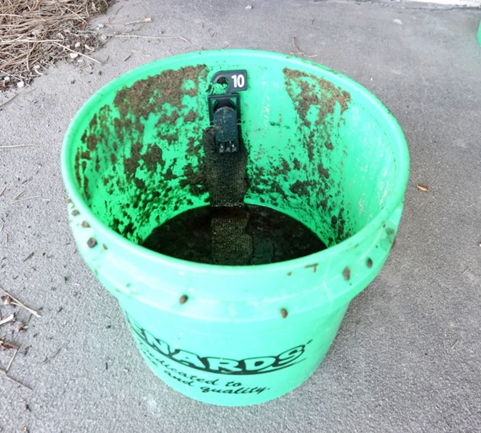
To bait a tree (or post or whatever you have available), remove the strip, hang the clamp from a nail, wire, etc., and you’re done.
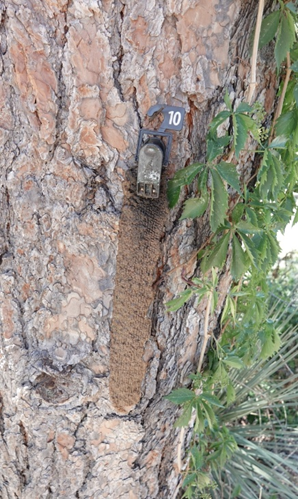
The same bucket-and-screw system lets you store the soaked strip inside when you’re done for the night — important, because squirrels and other animals will find and demolish an unattended bait strip during the day if you leave it out (or at least mine do!).
This setup also makes baiting away from home practical. The sealed bucket travels cleanly, the strip-and-clamp requires no separate containers, and the whole kit packs down to one bucket. Assuming you can keep the squirrels or other eager species at bay, keeping your bait during the day can bring in some interesting Lepidoptera — anglewings (Question Mark and Commas), Mourning Cloak, Red Admiral,
Viceroy, Red-spotted Purple, Goatweed Leafwing, and Hackberry and Tawny Emperors among the butterflies you might see, plus the occasional noctuid moth still lingering from the night before.
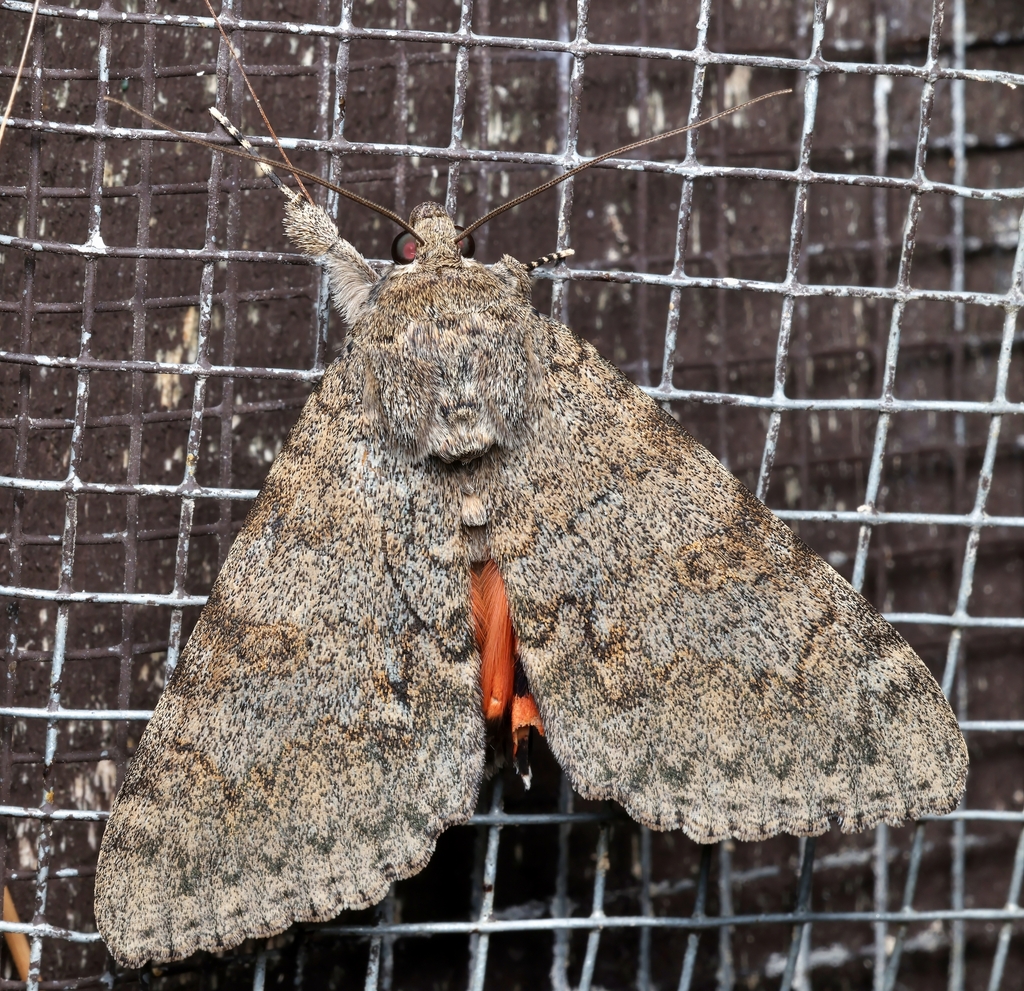
This bait mix has attracted a variety of moths to my Wildcat Hills locations, including the Joined Underwing (Catocala junctura) last summer.
Happy baiting!