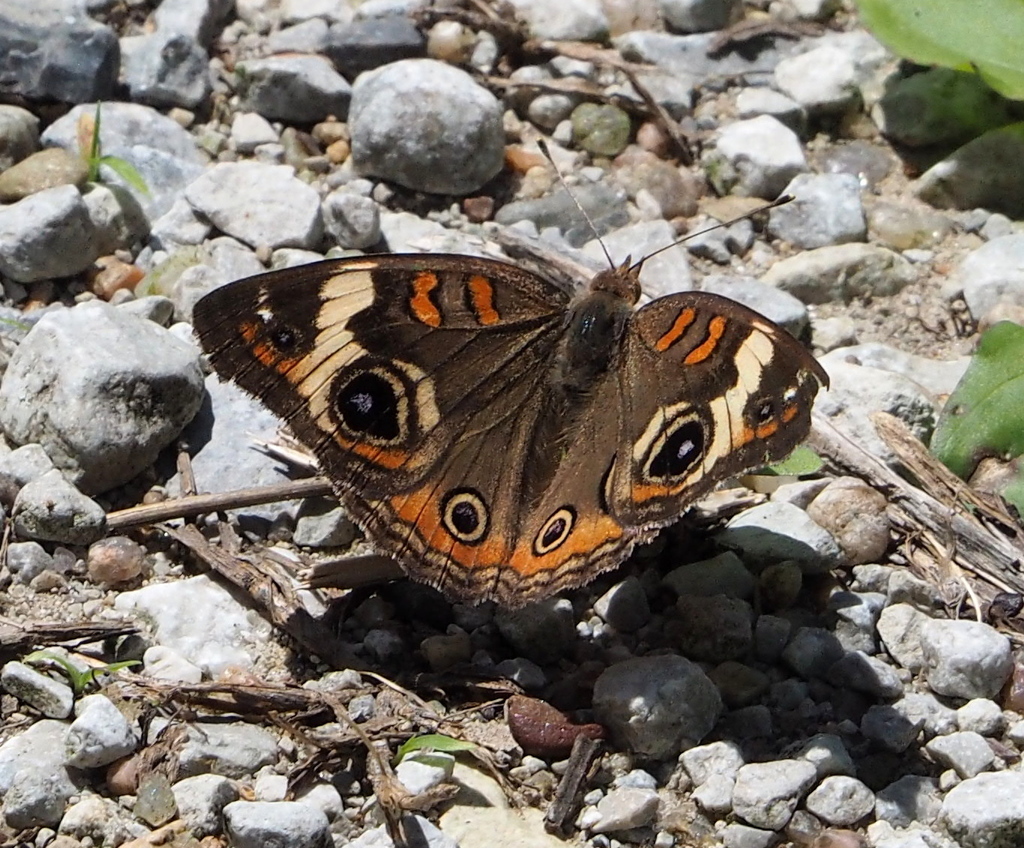
Working for Them – 3 Days, 3 Species

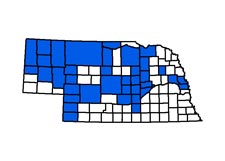
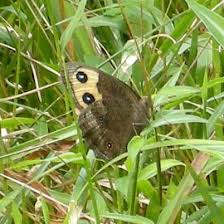
Day 1 – Friday July 3rd I decided it was time to cross Little Wood Satyr (Megisto cymela) off my list before they disappeared for the season. Their normal flight period is mid June to early July so there was not much time to spare. They inhabit open woodlands/woodland margins. My spot of last resort was Broken Arrow Wilderness just north of Fullerton where I’d seen them by the hundreds some years ago, but if I could find them before I got there so much the better. So first I stopped at Harold Anderson SWMA just north of Dannebrog for a “guick” look there. The area was open but the road gate was locked so I had to walk a lot farther than I intended. It was a nice walk but consumed about an hour and a half during which time I found no Little Wood Satyrs. So I pressed on to Broken Arrow Wilderness, arriving there about noon. After purchasing my day pass I set off on some woodland trails in search of my quarry. An hour later I gave up after finding three Northern Pearly Eyes which are normally much more difficult to find. How could this be? Puzzled and looking to salvage the day I decided to stop at some wetlands on the way home. First stop was a wet road ditch and marsh north of Worms in Merrick county where I’d had some success in the past. After about a half hour of looking I came across a single Silver-bordered Fritillary (Boloria selene ssp.) – new for the “Big Year”. Somewhat reassured and with the day not being a total loss (which it never is if you are out in the field) I made one last stop at a wetland between Boelus and St. Michael in northeast Buffalo County. It looked awesome with the roadsides lavished with milkweeds. But once again no new “Big Year” species. I’ll need to come up big in the next couple of weeks when most of the marsh inhabitants will be on the wing. As for the Little Wood Satyr the Niobrara Valley Preserve is my last chance or it will be one of those that got away. Day 1 – one new “Big Year” species. YTD total = 88

Silver-bordered Fritillary – Two subspecies of this wetland inhabitant, B. s. nebraskensis in the east and B. s. sabulocollis in the west inhabit most of the state north of the Platte River Valley. They may have up to three generations in our area – being found roughly in spring, mid summer and fall. Larvae feed on violets and adults rarely stray far from wetland/riparian areas. This is a NENHP Tier 1 species (see June 14 post)

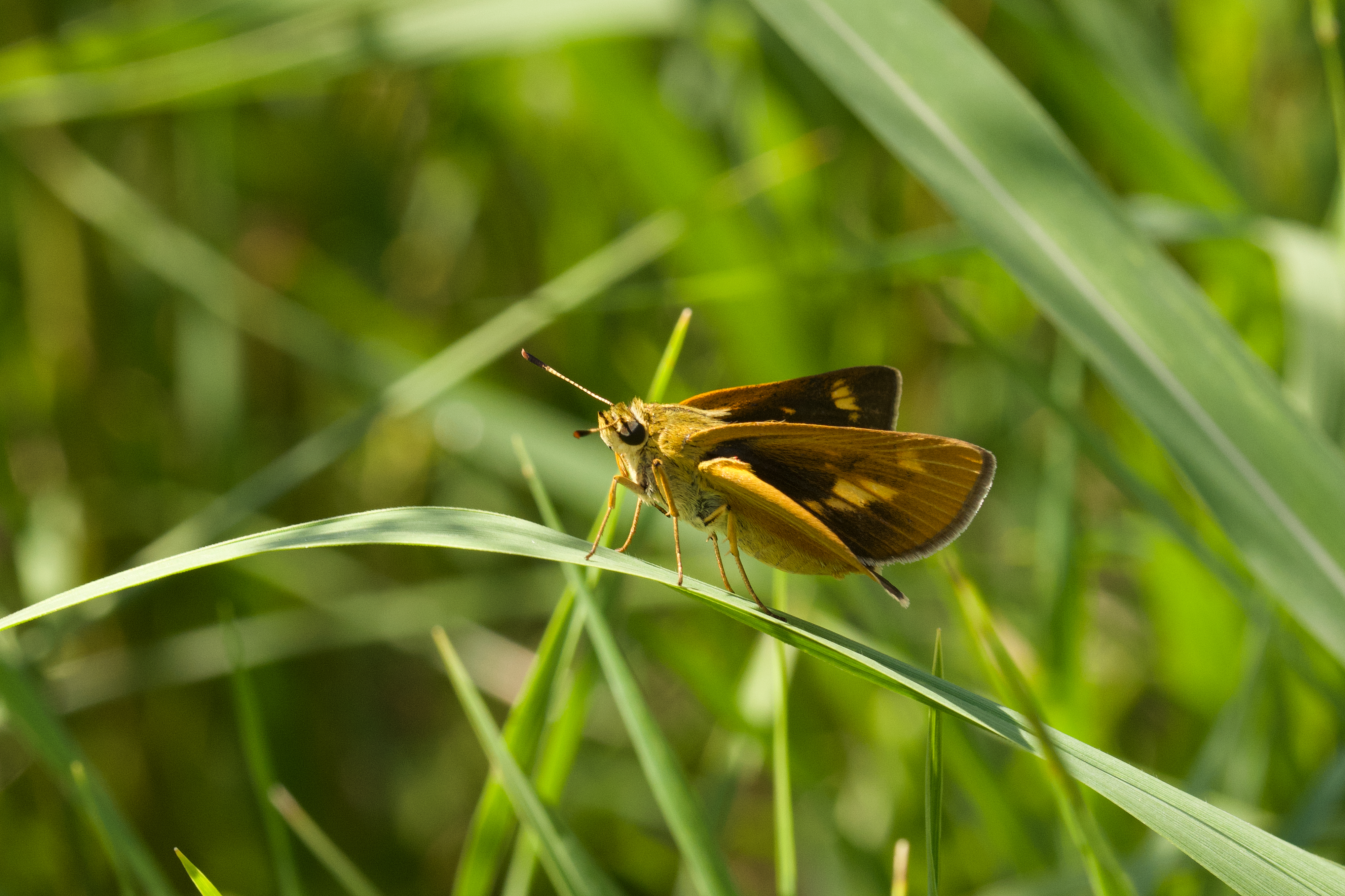
Day 2 – Saturday July 4th Jen and I set our sights on the Arogos Skipper (Atrytone arogos) which we had found at a couple of Waterfowl Production Areas (managed by the U S Fish and Wildlife Service) back in 2018 when doing regal fritillary surveys. The first we checked was Youngson WPA in eastern Kearney County. We spent the better part of an hour there checking milkweed flowers. Finding no Arogos skippers (but several regals) there we moved on to Macon Lakes WPA in Franklin County. Along the way we stopped to check an alfalfa field and found a Franklin County record – a snout butterfly (see July 2 post). Arriving at Macon Lakes we had barely parked and gotten out of the vehicle when Jen announced she had caught a skipper. Upon close examination it was indeed a male Arogos Skipper. Seeing several more skippers flitting around but with no need to disturb them we contemplated our next move and headed south to check the rugged hills adjacent to the Republican River to see if we couldn’t scare up an Ottoe Skipper. We found a passable road south and west of Franklin leading up into the hills and disembarked to begin prowling the road ditches looking for milkweeds in bloom. What should Jen find but another Arogos skipper (which I sometimes bill as the rarest skipper in the state). Having proven that thesis wrong we resumed our search for Ottoe Skippers but came up empty. However we did feel somewhat validated that we actually found something we were looking for where we were looking for it. Another day – another single “Big Year” species. YTD total = 89.
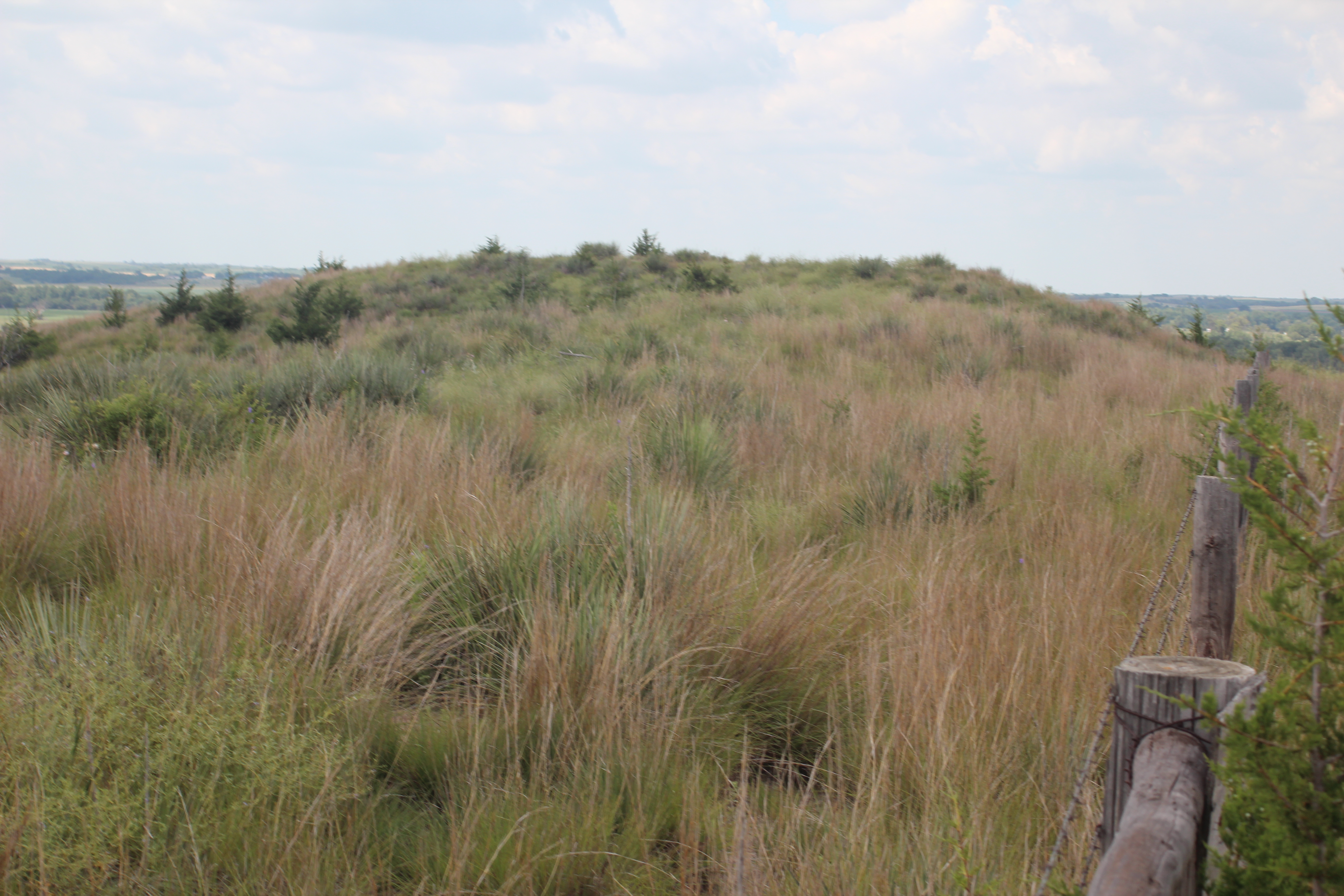
Arogos Skipper – This diminutive orange skipper has become increasingly difficult to locate as it’s prairie habitats have diminished in both numbers and quality. Records come from scattered locations across the state. Larvae feed on prairie grasses including big bluestem. There is one main flight in mid June extending into July but records as late as August 25 indicate a second generation may occur as well. This is a NENHP Tier 1 species (see June 14 post).

Day 3 – We decided to head back to Box Elder SWMA area in Lincoln County to try to find Ottoe skippers which had been found there in the past. We had waited to set out to arrive after the heat had set in and the butterflies were actively seeking nectar. Right off the bat – there it is, another Arogos Skipper. Man I was really getting tired of seeing these “rare” skippers. Ignoring several more that we saw we concentrated on a few other skippers taking nectar from the verbena and found several Crossline Skippers (Polites origenes) that we had not yet come across this year. Not the glamour bug we were looking for but still not shabby either. After traversing the hillsides several more times we resorted to our favorite past time – roadhunting. After an bit of that with no success we crossed the river and town of North Platte to an entirely different environment – wetlands. We snooped around several of those looking for oddities but found only Silver-bordered Fritillaries which two days ago we would have been thrilled to see. With time left for one last stop we located a State Wildlife Management Area (Muskrat Run) we’d never been to. It was unproductive as well so we wrapped up the day with one new “Big Year” species (albeit not the one we were looking for). YTD total – 90

Cross Line Skipper – This skipper is named for the shape of the stigma (black marking) across the dorsal forewing of the male. Individuals in the field can be identified by the faint band on the ventral hindwing. Records from late May to late August would seem to indicate the occurrence of two broods. This skipper has been found at scattered locations across the state. It is somewhat versatile in that it has been found in lower moister areas in eastern Nebraska while farther west it inhabits upland prairies. Larvae feed on bluestems and Tridens species including Purpletop Grass. This is a NENHP Tier 2 species (see June 14 post).

So we put in three days of searching a lot of different habitats and found three new “Big Year” species. At 90 total species we’ve pretty much picked the low hanging fruit and I don’t anticipate many more days of multiple sightings. But the adventure continues…

It Takes a Village – Six New Species

Lest anyone be confused the “Big Year” is not a solo effort. That was never more apparent than yesterday (July 1) when Jonathan Nikkila (hooray – you get pictures), my wife Jen and I went to Fontenelle Forest, Kinter’s Ford SWMA, Four Mile Creek SWMA and Table Rock SWMA.

We started at Fontenelle Forest where JoAnne Langabee had clued me in on where to find Northern Pearly Eyes and Tawny Emperors. It had rained earlier that morning so the Bladdernut and Indian trails were kind of slippery when we set out. Things did not start out that well as there was little activity, probably due to the early (by butterfly time) hour, wet conditions and lingering overcast. But after about an hour these conditions remedied themselves and we had a sudden flurry of activity. First Jen saw a Northern Pearly Eye (Lethe anthedon) when Jon and I were investigating elsewhere and put us on that butterfly. Shortly thereafter Jon spotted a Tawny Emperor (Asterocampa clyton) and we all gathered around to admire it as it posed for pics. Pleased with ourselves we started back and Jen or Jon pointed out an anglewing (Polygonia sp.) which turned out to be Eastern Comma (P. comma). So with three new “Big Year” species we headed back to the cars having also seen a Zebra Swallowtail, a half dozen Great Spangled Fritillaries and Eastern Tailed Blues to numerous to count.

So we next headed south to Kinter’s Ford SWMA in western Richardson county where Matt Brust (now Dr. Matthew Brust of Chadron State College) had discovered Byssus Skippers (Problema byssus) back in 2006 when those were the first records for that species from the state. We looked around there for the better part of an hour during which time Jon found a dead skipper on the ground (who does that?). Jen and I were back at the car rehydrating when Jon got our attention to come back and look at a skipper he had located in the grass while taking a work related phone call. It was indeed a Byssus skipper, and while still on the phone Jon managed to get a few pics before the skipper, tiring of the unwanted attention, flew away. “Big Year” species # 4.

So we then drove the 6 miles to Four Mile Creek SWMA to admire the Butterfly Milkweed in the area. It had rained there earlier in the day as well and between the mud in the parking lot and the flowers there were butterflies everywhere. As soon as we got out of the cars we all spotted a Snout Butterfly (Libytheana carinenta) prowling the mud puddles in the parking area – “Big Year” species # 5.

Thinking we might be able to find a second generation Horaces Duskywing we then headed to Table Rock SWMA where I’d seen them in good numbers back in 2003. We prowled the oak woodland margins for the better part of an hour, finding only Wood Nymphs and Anglewings. Finally on the way back to the parking area about 50 yards from the car we spooked up a smaller anglewing which I netted and determined to be a Gray Comma (Polygonia progne). So we released him/her back to the wild and called it a day with 6 new “Big Year” species and a year to date total of 87.

So how many would I have seen on my own – no way to tell. Maybe all six, maybe just a couple. The point being the results of this years “Big Year” search would not be possible without support of a village of people both supplying locations to look and assisting in the effort in person. My thanks to all of them.

Byssus Skipper – This is a recent addition to our state’s butterfly fauna, being first discovered by Dr. Matthew Brust in 2006. It’s range is restricted by the distribution of its larval hostplant Eastern Grama Grass (Tripsacum dactyloides) which in our state is southeastern Nebraska. It flies in a single brood from late June through mid July and has not been found to stray far from its hostplant. To date it has been recorded from only two sites in Richardson and Otoe counties.

Snout Butterfly – This butterfly cannot survive Nebraska winters but is becoming a regular stray that likely breeds here. Larvae feed on Hackberries (Celtis sp.). As a stray they can show up anywhere. We have records from early May to mid October.

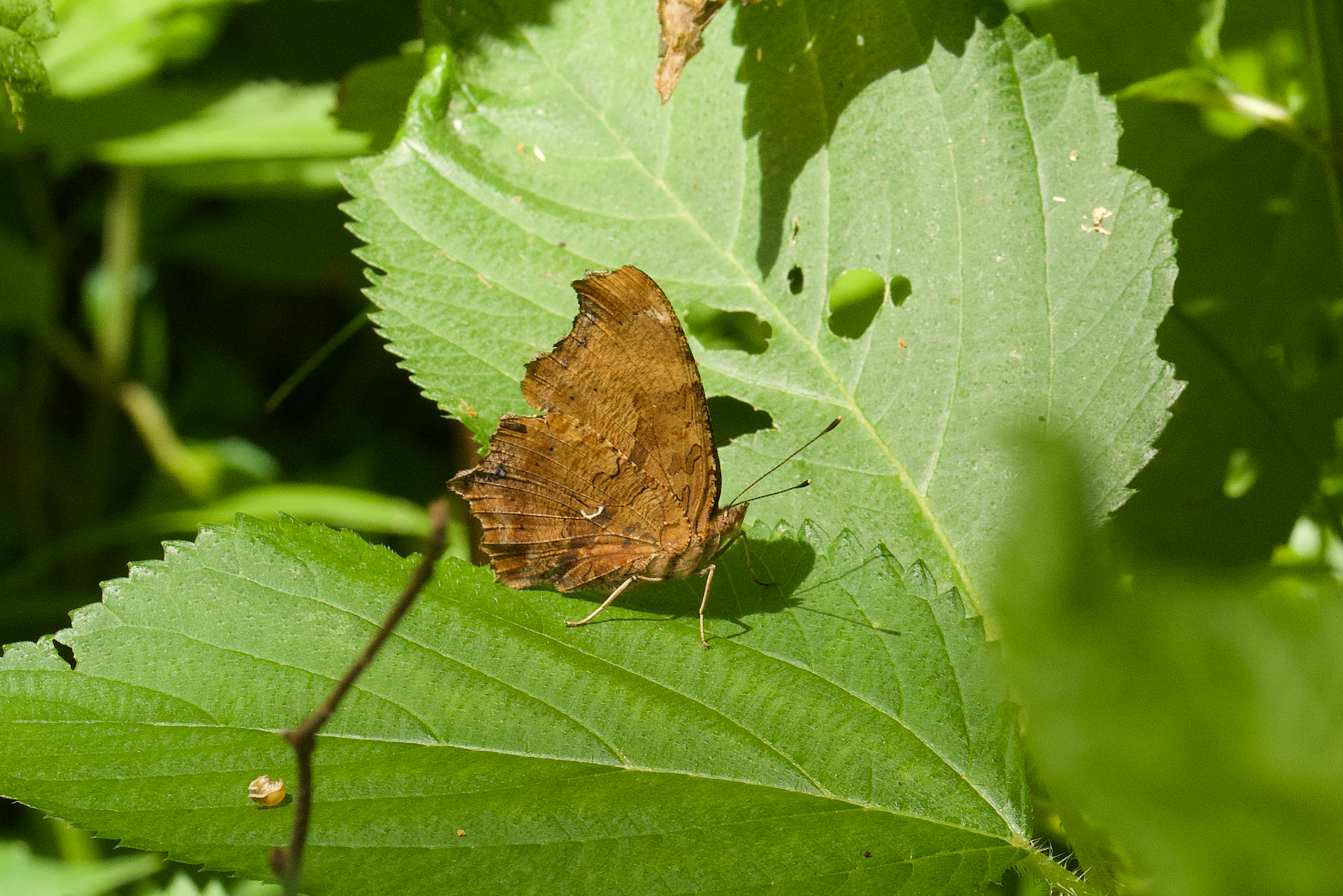
Eastern Comma – This butterfly overwinters as an adult and as a result can be seen the entire season from early April to mid November. During that time frame there are multiple broods with larvae feeding on nettles and hops. Adults frequent open woodlands and woodland margins but are also be found in urban settings. They are easily confused with Question Marks and Gray Commas (see May 8 post for keys to separating them). The Eastern Comma has been found statewide with the exception of the more arid regions of western Nebraska.

Gray Comma – This species is easily confused with the other two sibling species in the eastern part of the state. Once again consult the May 8 post for identification keys. Larvae of this species feed on Gooseberries and Currants (Ribes sp.). As with all Polygonia species adults overwinter. Multiple broods of adults have been found from late April to late October. As with the Eastern Comma the Gray Comma is absent from the more arid areas of western and southwestern Nebraska.

Tawny Emperor – The Tawny Emperor is a larger brighter version of it’s cousin the Hackberry Emperor. Both are generally found in the vicinity of their larval hostplants Hackberry trees (Celtis sp.). In Nebraska it is largely restricted to southeastern third of the state with an additional population in the Sioux county canyonlands. It is likely double brooded with populations peaking in late June and late August.

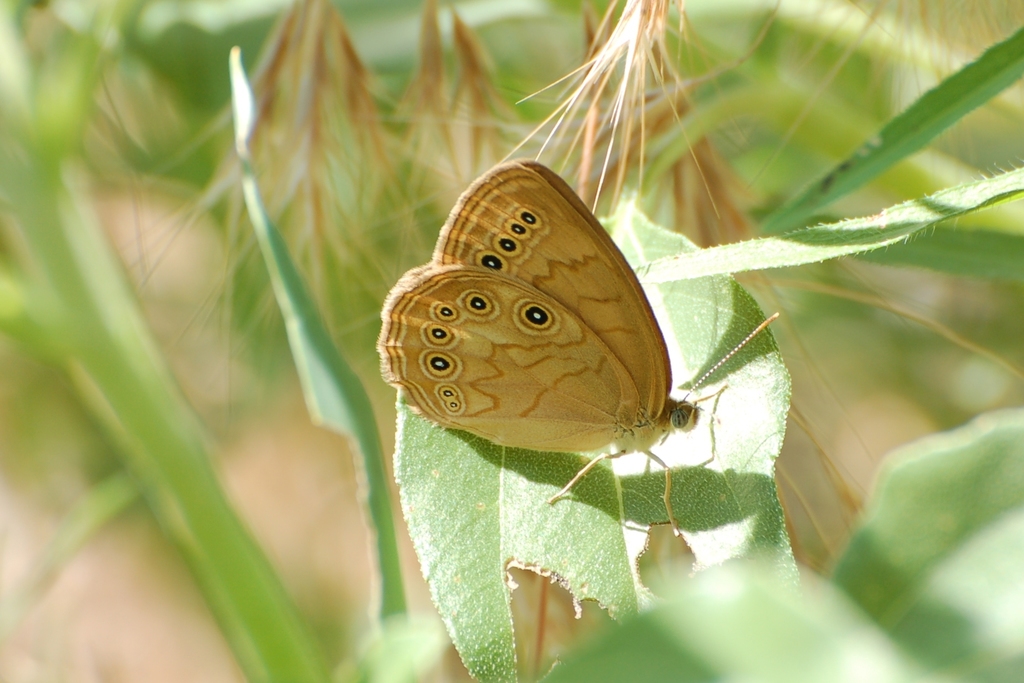
Northern Pearly Eye – Populations of this woodland denizen normally peak in late June/early July. However records from late May to early September indicate an occasional second flight may occur. Records are scattered across the eastern two thirds of the state. Larvae feed on a variety of grasses.

So once again thanks to everyone supporting this project!!

A couple of other comments – Fresh Sleepy Oranges are once again flying in my yard – the progeny of the migrants/strays that arrived in late May (see June 2 post).

I was looking through iNaturalist a while back for Wood Nymphs (Cercyonis pegala) and did not see any. Did I miss them? While not as sexy as Regal Fritillaries they are another native grassland specialist that is not nearly as widespread as they once were. We were happy to see them at Kinter’s Ford and Table Rock SWMAs.

Victoria Springs

I decided to make a day trip to the Victoria Springs area in Custer county to try to knock off two or three species – Acadian Hairstreaks, Silver Bordered Fritillaries and Eyed Browns and scratch my wetlands itch. So after getting a bit of a late start I arrived at the State Recreation Area about 11:00 am. After taking a quick tour I headed off to my go to Silver Bordered Fritillary spot – Alexandria Creek at the Milburn Road bridge. Once there I quickly spotted several Eyed Browns (Lethe eurydice), a Wood Nymph (Cercyonis pegala) both new, a couple of Regal Fritillaries, a Bronze Copper and Pecks and Long Dash Skippers. Additional searching yielded no Silver Bordered Fritillaries. As they are triple brooded, flying in the spring, mid and late summer I decided I must be between broods with the mid summer flight having not yet commenced. So with wet shoes I backtracked to a promising spot I’d passed by on the way up along the way up – a road along the Middle Loup River by the old town of Walworth. The road ran right next to the river for about a quarter mile and so I road hunted (again) that section and came across a milkweed in bloom next to some small willows. Thinking that looked promising I got out for a closer look and there it was – an Acadian Hairstreak (Satyrium acadica – whose larvae feed on willows). Go figure – every once in a while the world makes sense. So with a few odd jobs left undone at home and no more promising leads I headed back with three “Big Year” additions and feeling like maybe the world wasn’t totally messed up after all.

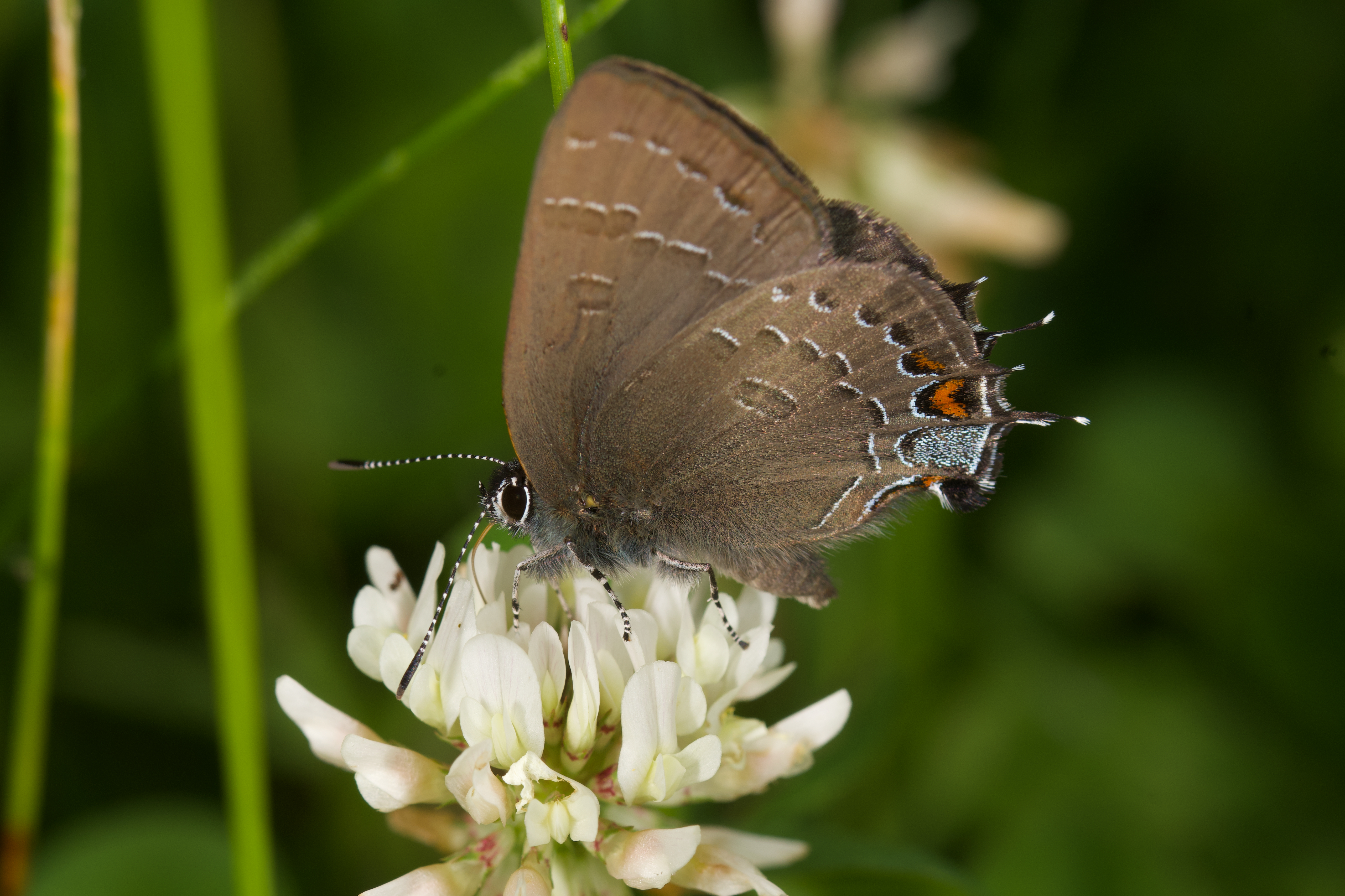
Acadian Hairstreak – from the June 19th post (It’s Hairstreak Season) “Larvae feed on willows (Salix sp.) and adults are usually found in riparian areas on or near their hostplants. Adults, which can be found from late June to mid July, are lighter colored than other members of this genus. Maculation on the interior of the ventral hindwing consist of a row of dots. They appear to be less common south of the Platte River valley but otherwise can be found statewide.”

Eyed Brown – This butterfly can be found from late June into early July in marshes and riparian environments where larvae eat sedges. In Nebraska this species is largely absent from areas south of the Platte River, probably due to the lack of wetlands there.

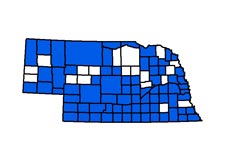
Wood Nymph – Despite the name this butterfly is usually not a resident of woods although woodland margins may be utilized. One generation of this butterfly emerges in late June with tattered adults sometimes lingering well into September. While they are somewhat tolerant of disturbance native grasslands are required to support populations of Wood Nymphs with larvae feeding on Bluestems, Purpletop, Oatgrass, Needlegrasses and others. There is a clinal shift in appearance from north to south in the state. Northern populations are almost uniformly dark brown/black while individuals from our more southerly counties sometimes have extensive yellow coloration around the eyespots. Taxonomists have delighted naming all sorts of weakly differentiated (my opinion) subspecies, 19 at last count. This butterfly has been found in all 93 Nebraska counties.

With the addition of Saturday’s three species the “Big Year” total is up to 81.

Mile Marker 1- Worth the Wait

On the final day of our three day road trip we decided to revisit an area where the weather had shut us down back in May. So we went west on I-80 to mile marker 1 (one mile from Wyoming) and took the exit and started south. The target destination was a small rock formation a mile or two in where I had found Shasta Blues and Western Green Hairstreaks in the past. But we stopped well short of there at the first blooming milkweed we saw along the road and were immediately rewarded. There was a Western Green Hairstreak (Callophyrs affinis apama or a. homoperplexa). The day was already a success!! We road hunted milkweeds and thistles up to the rock formation and turned up a couple of skippers new for the “Big Year”, Pahaska and Uncas (Hesperia pahaska and H. uncas). I love skippers, especially the genus Hesperia. They are the ultimate insect symbols of the untamed prairie – like the buffalo only quite a bit smaller!! So with the day already a total success we headed east to check out a couple more spots on the way home.

Still stuck on the idea of checking a wetland we headed to The Garden County Wildlife Refuge next to the North Platte River south of Oshkosh. I’d been eyeballing it for awhile but had never made time to stop for a looksee. So make time we did. I pulled up next to an open gate and we got out to investigate. The ground I thought would be squishy was crunchy. There had been standing water there at some point but that time had long since passed. Disappointed we checked out a couple more spots along the road until there it was – a Queen (Danaus gillipus) taking nectar from a milkweed flower. The Queen is a close relative of the Monarch but does not migrate, instead showing up in our area as a southern stray. Having at least partially salvaged that stop but still not completely giving up on wetlands we went east to Lewellen and Road 46 just south of town.

We had visited Road 46 and its wet ditches previously (see June 13 post) and found some butterflies on milkweeds just beginning to flower. So now we revisited the site only to find the roadside milkweeds had been destroyed by the county under the guise of road maintenance. But farther down the road there was an extensive dogbane patch that had escaped the county’s wrath and was just coming into its own. As we road hunted (do you detect a pattern here?) Jen said she saw a copper so we jumped out to investigate. It ended up being a Bronze Copper (Lycaena hyllus) – new for the “Big Year”. Thus encouraged we did some walking (technically still “road hunting”) along the dogbane patch. There was quite a bit of activity but nothing new so after a while I got back into the pickup to wait for my wife to do likewise when she exclaimed “That’s no Painted Lady!!” So I got back out to find her pointing out a mint fresh Milbert’s Tortoiseshell (Aglais milberti), not unheard of for that area, but totally unexpected. So that was the cherry on the sundae. After one last quick stop in the loess hills southwest of North Platte to look for Baird’s Swallowtail larvae (no luck) we made our way back home. What a great three days!

Uncas Skipper – This prairie resident inhabits the mixed/short grass prairies in the western half of the state. Larvae feed on grasses including Blue Gramma and Green Needle Grass. There is a main early summer flight with a possible partial second brood. Adults have been found from May 23 to September 1. Checking Platte Thistle flowers is often productive.

Pahaska Skipper – Another of the prairie skippers Pahaska can be found in the panhandle where a single flight occurs. There are sightings from late May to late July. Larvae feed on grasses with Blue Gramma most frequently cited in literature. Adults have been found in hilly short grass prairies and grassy clearings in the pine forests of the region.

Bronze Copper – Multiple generations of this striking Copper fly in Nebraska where it has been sighted from late May to late September. It can be found statewide, most often in wet road ditches or riparian areas where its larval hostplants Docks (Rumex sp.) occur. This species is strongly sexually dimorphic with females having an orange upper forewing which is absent in males.

Western Green Hairstreak – This taxonomy of this minute hairstreak is somewhat confusing. Depending on the author you might find it listed as apama, affinis or homoperplexa. In any case the known range of this butterfly in the state is restricted to the southern panhandle where it can be found on/near rocky outcroppings where it’s larval hostplants (buckwheats, mainly sulfur flower Eriogonum umbellatum) occur. Adults have been found from late June into early August.

Milbert’s Tortoiseshell – This handsome butterfly is likely a resident in the panhandle, with strays found randomly across the rest of the state. It’s larvae feed on stinging nettles and adults are often found in moister canyons where the hostplant can be found. It is possible to see this butterfly the entire season as adults overwinter resulting in very early and late records.

Queen – This southern stray is reported from the state just about every year but only as an individual or two. With milkweeds being their larval hostplants breeding is possible but overwintering is not. It is not a migrant as is it’s close relative the Monarch but rather a resident from our southernmost states and into Mexico, Central and South America. As a stray there is no preferred habitat – it can show up anywhere.

So with six new species for the day the “Big Year” total is 78.

Soldier Creek, Gilbert-Baker, Sowbelly Canyon

On day two of our three day western Nebraska field trip Jen and I started out by doing some exploring since the morning skies were cloudy and we had time to be tourists. Neither of us had ever been to Soldier Creek Wilderness (National Forest Service) adjacent to Fort Robinson State Park so we took the road through the park to check it out. Just as we got to there the butterfly gods smiled on us and the sun broke through. There was a milkweed along the road and lo and behold a skipper had just come out for breakfast. It was a Taxiles Skipper (Poanes taxiles), a new species for my “Big Year”. It was a little early in the year for that skipper to be out so that was a pleasant surprise. We kicked around there for a bit before moving on to our intended destinations Gilbert-Baker SWMA north of Harrison, Sowbelly Canyon and the Pants Butte area. Upon our arrival there we quickly found Icarioides Blues (Plebejus icarioides) to tally our second “Big Year” species of the day. Butterflies were not crazy abundant but enough were around to keep us looking. A lot of what we saw we had seen the previous day at Wildcat Hills – numerous Aphrodite Fritillaries, an occasional Weidemeyer’s Admiral and lots of blues to check out, mostly Melissa and Reakirt’s. We headed up to the Pants Butte area where I had seen Shasta Blues back in the day but could not locate them. Thinking perhaps a little change of scenery was in order we decided to see if we could find any accessible wetlands along the Niobrara River some 40 miles to the south. So we drove down Highway 29 to the parking area of Agate Fossil Beds National Monument near the river and checked our road ditches looking for any signs of life. It was getting a little late and perhaps the butterflies had already closed up shop. In any event we were unsuccessful there as well so we called it a day with two new species, one expected and the other a complete surprise.

Taxiles Skipper – This western skipper reaches the extreme eastern limits of its range in northern Nebraska where it has been found as far east as the Niobrara Valley Preserve in Brown and Keya Paha counties. Larvae feed on various grasses and adults have been found from 22 June to 1 August with peak numbers normally found in early to mid July. Steve Spomer is looking at designating our Nebraska populations as a new subspecies based on some morphological differences between ours and the more western populations.

Icarioides Blue – This Blue’s Nebraska range is restricted to the panhandle region where it flies in a single generation from late May well into July. Larvae feed on lupines. Adults frequent the canyons and buttes near the hostplants and can sometimes be abundant.

With the two new additions the “Big Year” species count stands at 72.

Wildcat Hills

Jen and I made our second trip to the panhandle Sunday through Tuesday. Sunday we met Jon Nikkila and his son Bennett at Wildcat Hills SRA about 9:30 am MDT. After some scouting we settled on an area with an abundance of milkweeds and an occasional thistle in bloom. Right off the bat we netted a swallowtail to verify its identity. Upon determining it was a Two-tailed Swallowtail (Papilio multicaudatus) we released her to rejoin her compatriots. We spent another hour or two chasing various butterflies and ended up identifying Edwards’ and Aphrodite Fritillaries (Speyeria edwardsii and S. aphrodite). Driving the SRA’s roads we sighted a Weidemeyer’s Admiral (Limenitis weidemeyerii). We then met up with Master Naturalist Colin Croft who led us into some of the SRA’s more remote areas where we found several Long Dash Skippers (Polites mystic). Upon our return Jen and I kicked back to enjoy the scenery and smell of the pines, watching a squall approach over the bluffs from the west until it reached us and ended our butterfly day.

Long Dash Skipper – A single flight of this skipper can be found from mid June to mid July. It frequents moist habitats in the northwestern half of the state. Larvae feed on a variety of grasses.

Two-tailed Swallowtail – This magnificent butterfly is found in the western half of the state where the larvae feed primarily on Chokecherry and Green Ash. The species overwinters as a pupa so emerging adults have been noted as early as mid April and as late as mid September. They closely resemble Eastern Tiger Swallowtails and often cannot be separated in the field. Close inspection of the yellow spots on the dorsal forewing margin can be used to separate them. They are rectangular in the Two-tailed Swallowtail and rounded in Eastern Tiger Swallowtails. As the name indicates the hindwing possesses two tails which may not be evident on worn individuals.

Edwards Fritillary – This handsome butterfly has been found in the panhandle and east along the Niobrara River to the Niobrara Valley Preserve. There is also a report from the loess hills in south central Nebraska. Larvae overwinter and then feed on violets the next spring. One generation of adults have been found as early as late May and until late September but numbers usually peak in June. In adults the color on the upperside is not as vibrantly bright as in Aphrodite Fitillaries and the ventral hindwing is almost entirely greenish with large silver spots.

Aphrodite Fritillary – Like other true fritillaries, larvae of this species feed on violets and there is one extended flight each year. Aphrodite Fritillaries used to turn up occasionally in eastern Nebraska but have not been found there since 1978 so they likely have been extirpated from the eastern half of the state. They can still be found in abundance in the pine woodlands of the panhandle.

Weidemeyer’s Admiral – This striking butterfly is found in woodland margins in the forested regions of the state’s panhandle. It’s range encompasses western North America and in Nebraska it was found as far east as the Niobrara Valley Preserve in Brown and Keya Paha counties. It has since relinquished that range and has not been seen there since 1995. In our area larvae likely feed on chokecherry almost exclusively.

All in all a fun day in the Wildcat Hills with good friends and five new “Big Year” finds!

Fontenelle Forest, Kinter’s Ford, Prairie Knoll, Four Mile Creek and a Free Truck Wash

Fontenelle Forest – Seeing on “Nebraska and Great Plains Butterflies and Moths” that Hackberry Emperors were being found at Fontenelle Forest and needing them for my Big Year list Thursday morning I headed east for a day of adventures. As always the weather forecast was a factor with late day/evening storms being forecast for southeast Nebraska. I arrived at Fontenelle Forest in the late morning and began to scout out the area. Driving to the Hitchcock Wetlands Learning Center the Hackberry Emperors were everywhere with a few Red-spotted Purples sprinkled in. Cool I thought, two new species for the year without getting out of the car. So I drove back to the Camp Logan parking area and started to hike up the Bladdernut Trail. I hadn’t gone far when a hairstreak flew off the trail and perched atop a tall “weed” (aka unknown plant). As I angled around to get a good side view he/she rotated to keep facing me. When it finally tired of this game and let me get a good look I was amazed. It was a Hickory Hairstreak. Eventually it tired of my attention and flew off into the trees. A short time later it began to sprinkle. Not wanting to waste time waiting for the weather to clear I headed south to a couple of my “go to” spots in Richardson and Pawnee counties.

Kinter’s Ford SWMA is located on State Highway 8 a mile east of the Richardson/Pawnee county line. I pulled into the parking area east of the Big Nemaha River and was greeted with the sight of flowers everywhere. Checking out the milkweeds I found several Delaware Skippers – new for my Big Year. Noticing a large patch of smooth sumac in bloom next to the trees I went down to check those out as well. Butterflies were everywhere. People often overlook these as nectar sources when they are in bloom. But the butterflies don’t. Among the butterflies found there was a Silvery Checkerspot and several Dione Coppers (both new for the Big Year), along with three Giant Swallowtails and a host of common species.

Prairie Knoll SWMA is a quarter section located 1.5 miles north and a mile west of Du Bois in Pawnee county – about 5 miles away from Kinter’s Ford. It is one of my favorite areas because of the number of butterfly milkweeds found there. Road hunting the flowers in the ditch on the way there I found my year’s first Coral Hairstreak and Regal Fritillary. Strolling the property revealed no additional new species, with the milkweeds there just beginning to bloom.

Four Mile Creek SWMA – With some time left before the weather was supposed to close in I did some exploring end ended up back in Richardson county at Four Mile Creek SWMA three miles east and a mile south of Kinter’s Ford. There were common and butterfly milkweeds in flower along the road and parking lot. There I found a Great Spangled Fritillary, and about a half dozen Banded Hairstreaks and Dun Skippers all new for the year as well as Roadside and Tawny-edged Skippers.

The Free Truck Wash – With the skies darkening to the north and west I decided to head back. Not wanting to be on the interstate with a bunch of traffic in bad weather I opted for an alternative more southerly route through Adams, Claytonia and Wilbur which in hindsight was probably a mistake. It started raining just south of Lincoln and by the time I got to Claytonia it had begun to hail. I took shelter under a tree but that seemed to do little good. Rather than sit there and take a beating I headed back onto the road and drove through a couple more miles of hail before the storm regressed back into a torrential downpour. After 25 miles of rain it finally stopped somewhere south of Seward and from there the rest of the trip was uneventful. The next morning I heard that DeWitt (5 miles distant from Claytonia) received over 7″ of rain. Crazy – nobody needs that.

Delaware Skipper (Anatrytone logan) – The most common of the three Golden Girls (see June 14 post), this adaptable grassland species flies in multiple generations from mid summer to early autumn, sometimes finding their way into urban parklands and landscapes. It’s larvae feed on various prairie grasses including big bluestem and switchgrass. The Delaware Skipper is found statewide. It can be separated from the other gold skippers by the black veins on their wings.

Dun Skippers (Euphyes vestris) – This uniformly dark skipper can be confused with Northern Broken Dash and Little Glassywing Skippers (more on them in another post later), but it is by far the most common of the three. It’s larvae feed on various sedges. This species is found statewide as well. With records extending into early September at least a partial second brood is likely.

Dione Copper (Lycaena dione) – Also called the Great Gray Copper this species is one of the larger coppers, being about the same size as a quarter. A single flight can be found from mid June to early July. The length of the orange hindwing border is variable, being more extensive in females. This copper is found statewide. Larvae feed on various Docks (Rumex sp.).

Coral Hairstreak (Satyrium titus) – Larvae feed on Chokecherry and Plum (Prunus sp.). While in the same genus as the other hairstreaks it actually lacks a tail on the hindwing. Instead this butterfly can be identified by the “coral” colored markings on the outer margin of the ventral hindwing. While wild plums are larval hostplants most are found on/near chokecherries. Finding milkweeds in bloom in close proximity to chokecherry plants increases your odds of locating this butterfly. They are found statewide.

Banded Hairstreak (Satyrium calanus) – Larvae feed on oaks and their range in Nebraska largely coincides with that of native bur oaks. Adults often perch on their host plants with males flying out to investigate passing butterflies. They can be highly localized, often being found exclusively on the same tree or two for multiple years while being absent from other trees nearby. Tapping oak branches puts them into flight (perched in the trees they are not easily located). Checking flowers in the vicinity of oak trees can also be productive. The Band in the common name refers to the band of white markings on the underside of the hindwing. This butterfly is NENHP listed as a Tier 2 species.

Hickory Hairstreak (Satyrium caryaevorum) – Hickory Hairstreaks are seldom reported and their range is restricted to southeast Nebraska where their larval hostplants native hickories (shagbark and bitternut) occur. This butterfly is NENHP listed as a Tier 2 species.

Regal Fritillary (Speyeria idalia) – This handsome butterfly is listed as a Tier 1 species on the NENHP rankings meaning it is a species of concern nationwide. Regal Fritillaries have been found statewide and while not as numerous as in the past they can still be found in good numbers at some localities. Their larvae eat various Violets (Viola sp.) and overwinter as freshly hatched caterpillars in leaf litter. Larvae surviving the winter begin feeding in the spring and adults begin to emerge in mid June. After a few weeks during which mating occurs most males die and the females go into a period of inactivity until late August/early September when they begin the process of egg laying.

Great Spangled Fritillary (Speyeria c. cybele) – Ten subspecies of this butterfly cross the continent from Nova Scotia to the Puget Sound. The nominate subspecies occurs in Nebraska where it has been found everywhere except the southern panhandle and southwestern counties. Like the Regal Fritillary it emerges in mid June and lingers into early September. Larvae feed on Violets.

Silvery Checkerspot (Chlosyne nycteis) – Most sightings of this butterfly are from June into early July which would suggest a single flight. But records from as late as mid August suggest the possibility a partial second brood. Silvery Checkerspot larvae feed on a variety of composites including sunflowers, coneflowers and asters. Adults are usually found around woodland margins or at mud. Most Nebraska records are from the eastern and northern parts of the state. Adults are similar to Pearl Crescents and Gorgone Checkerspots but are larger than both and has more extensive open orange area on its wings then Gorgone Checkerspots. This butterfly is on the NENHP listed as a Tier 2 species.

Red-spotted Purple (Limenitis arthemis astyanax) – There are two subspecies of this butterfly. The nominate subspecies Limenitis arthemis arthemis is more northerly in distribution and has a broad white band across its wings. Limenitis arthemis astyanax (found in Nebraska) is more southerly in distribution and lacks the broad white band. It is thought that this adaptation is a form of mimicry to gain protection from predators by resembling Pipevine Swallowtails whose larvae feed on poisonous pipevines which renders them distasteful. Red-spotted Purples have been found on the wing from June into September, but the bulk of our sightings are from June into mid July. Chokecherry (Prunus virginiana) is the primary larval hostplant in the state. Adults seem to prefer woodland margins. This species ranges west up to the the panhandle where it is replaced by another banded sibling species Weidemeyer’s Admiral (Limenitis weidemeyerii). Hybrids between these two species have been found at the Niobrara Valley Preserve in Brown and Keya Paha counties. But that’s fodder for a later post.

Hackberry Emperor (Asterocampa celtis) – The Hackberry Emperor larvae feed on (you guessed it) Hackberry trees. This butterfly can be found statewide and has two generations peaking in mid June and mid August. It frequents woodland margins where it can sometimes be abundant. While also visiting flowers it, along with many other woodland butterflies seeks out sap flows, rotting fruit and the like. It is not averse to landing on humans where it may take up perspiration, presumably for the salt content.

So all in all an exciting day. 11 new species for the Big Year bringing the ytd total to 56. I would encourage you to visit the three Wildlife Management Areas in Richardson and Pawnee counties. You will be the only person there. They are in close proximity and you can have good success walking the roads but I’d encourage you to visit the sumac in bloom at Kinter’s Ford which is a pretty short walk.

One interesting photo was sent in by “acolescjj” that Mark Brogie was able to identify as Mournful Thyris (Thyris sepulchralis). Thanks to you both!!

It’s Hairstreak Season

Mid June to mid July is Hairstreak season. A single generation of five hairstreaks (genus Satyrium) found in the state fly only in that time period. They get the name hairstreak from the threadlike extensions on the bottom of their hindwing. It is thought that the orange spot and hairstreak on the hindwings are meant to convince (or confuse) predators into thinking that is the insects’ head and to direct their attack there. At which time the butterfly escapes, cosmetically damaged but still alive. The five Nebraska hairstreaks are the Coral (S. titus), Acadian (S. acadicum), Banded (S. calanus), Hickory (S. caryaevorum), and Striped (S. liparops). Of the five Banded and Coral and Hairstreaks are usually found every year. Acadian Hairstreaks about every other year, Striped Hairstreaks about every five years, while Hickory Hairstreaks are seldom reported. Of the five species Coral, Hickory, Striped and Banded are all NENHP Tier 2 species (see June 14 post).

Banded Hairstreak – Satyrium calanus

Larvae feed on oaks and their range in Nebraska largely coincides with that of native bur oaks. Adults often perch on their host plants with males flying out to investigate passing butterflies. They can be highly localized, often being found exclusively on the same tree or two for multiple years while being absent from other trees nearby. Several personal observations – I’ve seen this hairstreak in the morning (as early as 7:00 am) on east facing oaks. Tapping oak branches puts them into flight (perched in the trees they are not easily located). Checking flowers in the vicinity of oak trees can also be productive. The Band in the common name refers to the band of white markings on the underside of the hindwing.

Coral Hairstreak – Satyrium titus

Larvae feed on Chokecherry and Plum (Prunus sp.) While in the same genus as the other hairstreaks it actually lacks a tail on the hindwing. Instead this butterfly can be identified by the “coral” colored markings on the outer margin of the ventral hindwing. While wild plums are larval hostplants most are found on/near chokecherries. Finding milkweeds in bloom in close proximity to chokecherry plants increases your odds of locating this butterfly. They are found statewide.

Acadian Hairstreak – Satrium acadicum

Larvae feed on willows (Salix sp.) and adults are usually found in riparian areas on or near their hostplants. Adults are lighter colored than other members of this genus. Maculation on the interior of the ventral hindwing consist of a row of dots. They appear to be less common south of the Platte River valley but otherwise can be found statewide.

Striped Hairstreaks – Satyrium liparops

While Striped Hairstreak larvae feed primarily on Chokecherry (P. virginiana) locating adults seems to be completely haphazard, with individuals often showing up randomly at unexpected locations (you can’t go looking for them, they just “happen”). The ventral hindwing is subtly marked with white striping. Distribution is statewide.

Hickory Hairstreak – Satrium caryaevorum

Hickory Hairstreaks are seldom reported and their range is restricted to southeast Nebraska where native hickories (shagbark and bitternut) occur. Most sightings are of single individuals. However, as is always the case, there are exceptions. Jim Reiser and I stumbled onto a population in a “ravine” west of Lincoln in 1994 where they were everywhere. Knowing we would never see this again we collected a couple dozen, mostly males (sadly for us males in the insect world we are largely disposable). They just kept floating out of the trees. When we left it seemed like there were more than when we arrived. Every once in a while the stars line up and normally small populations explode. Enjoy those moments when you come across them. I’ve driven Highway 34 west out of Lincoln several times (as an alternative to the Interstate madness) in recent years and cannot say for sure where that location is. Landscapes change, sadly it seems, hardly ever for the better.

There is one historic record of Edwards Hairstreak from Cherry county from about a 100 years ago but for the sake of brevity I won’t cover it here. So the hairstreaks are out. They’re small (fingernail sized) and very similar but with good pics can be identified. Or just enjoy them being there. Happy Hunting!

The Nebraska Natural Heritage Program and the Golden Girls

While there are no butterflies in Nebraska that are on US Fish and Wildlife’s Endangered or Threatened Species list there are quite a number of species from the state whose future is of concern, either regionally or nationally. These species are tracked by a cooperative nationwide Natural Heritage Program. Dr. Rachel Simpson (Nebraska Program Data Manager/GIS Specialist) has consented to explain the Program to us. She writes:

“The Nebraska Natural Heritage Program (NENHP) was created in 1987 to gather information on rare plants and animals and native plant communities, such as prairies, woodlands and wetlands. The program is also involved in conservation planning, recovery of rare species, and native habitat management. Examples of current projects are Salt Creek Tiger Beetle recovery and the management of native prairies and oak woodlands.

The Nature Conservancy began establishing state heritage programs in the 1970s as a means to determine where to best conserve biodiversity. Prior to this there was no central storehouse for information on which species were rare, their abundance and where on the landscape they occurred. Heritage programs have now been established in all 50 states, 9 Canadian provinces and territories, and parts of Latin America. In the U.S. most programs are housed in state conservation agencies or universities. The Nebraska Natural Heritage Program is part of the Nebraska Game and Parks Commission.

In general NENHP and partners gather information about species that fall into one of two categories. ‘Tier 1 species’ are globally or nationally most at risk of extinction. ‘Tier 2 species’ are not at risk from a global or national perspective but are rare or at risk of disappearing from Nebraska.”

More information on the Nebraska Natural Heritage Program, including a link to a list of butterflies and other species tracked:
http://outdoornebraska.gov/naturalheritageprogram/

More information on the network of programs:
https://www.natureserve.org/

NENHP lists 14 butterfly species on their tier 1 list and another 84 as tier 2. Two of the Tier 1 species are the Ottoe and Arogos Skippers (Hesperia ottoe and Atrytone arogos). Both are prairie specialists and are two of what I like to call the “Golden Girls”. These two along with the Delaware Skipper (Anatrytone logan) can be nearly impossible to identify in the field. Here they are and how you might see them in the field. Get your field guide out and see how you do.

OK, how did you do? Sometimes if you’re lucky and the skipper cooperates you’ll get a look at the upperside. Then things get a little easier. Ottoe Skippers can easily be separated. The Delaware and Arogos Skippers still are frighteningly similar. Delaware Skippers have black wing veins and a narrower, darker, more sharply defined wing margin while in Arogos Skippers the veins are not black and the wing margin marking is wider, a lighter brown with a more diffuse inner edge. All this and hoping you see a fresh skipper and not a worn one. So now try your luck.

Oh, did I forget to mention all three species are sexually dimorphic (the males and females are recognizably different). You should have been able to id the top row as Arogos Skippers (male and female), the middle row as Delaware Skippers (male and female) and the bottom row as Ottoe Skippers (male and female).

As I mentioned earlier both the Arogos and Ottoe Skippers are on the NENHP Tier 1 list meaning they are at an increased national risk of extinction. At the state level both are infrequently reported. Arogos skippers have been reported three times in the last 25 years (once in 2005 and twice in 2018). Ottoe skippers have been found twice in the last 15 years, in 2007 and 2010. Both are prairie specialists and suitable habitats are increasingly hard to find.

I hope you’ve enjoyed your foray into skipper identification. I call skippers the sparrows and shorebirds of the butterfly world – lots of them and hard to id.,

Crescent Lake/Ash Hollow Trip – 18 species, 6 new

Jen and I decided to visit the Crescent Lake area north of Oshkosh in hopes of crossing Lupine Blues, Giant Yucca and Uncas Skippers off my big year list. To cut two hours off the three and one half hour trip we traveled as far as Ogallala the night before. That also enabled us to arrive a little earlier and avoid some of the mid 90’s heat predicted for later in the day. While it used to be a regular stop for me I had not been to Crescent Lake since 2002. So it was with much anticipation we began the 28 mile drive north out of Oshkosh into the sandhills and Crescent Lake. I had been forewarned of a high water situation in the area and about half way to the Refuge there was a large sign next to the road warning of water across the road and that only four wheel drive vehicles should proceed. Duly warned we proceeded. I guess once you get to a certain age you should realize that nothing is forever and things change but I was not prepared for what I saw upon arriving at Crescent Lake. Somewhere in the 18 years since I had last visited the area had burned. What used to be yucca covered hills were now nearly devoid of that plant. So no yucca, no Giant Yucca Skippers.

The low spots in the road in the area had been raised (at considerable expense I would think) by up to a foot for one lane traffic. We pulled off at Island Lake to take this pic with just the roof of a picnic shelter (or something) just visible above the water.

So having struck out on Giant Yucca Skippers we started working our way back to Oshkosh stopping first at NE Game and Parks Crescent Lake State Wildlife Management Area. Following the road to the boat dock we drove through a prairie dog town and over one burrow some wise guy had dug in the middle of the road. He/she saw us coming and safely ducked to avoid any interaction with us. Arriving at the boat dock we noticed there were some willows nearby that had attracted some Viceroys (Limenitis archippus) and a Mourning Cloak (Nymphalis antiopa) – the larvae of which both feed on willows. While not rare, both of them were new for my Big Year species count.

Both species are found statewide with the larvae feeding mainly on willows. Viceroys have two generations and overwinter as early instar larvae while Mourning Cloaks overwinter as adults. When found, Mourning Cloak larvae often feed in a group.

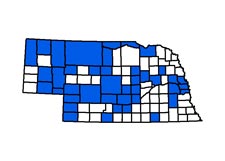
Heading back to Oshkosh we passed a roadside mud puddle and stopped to check it out. Some Checkered Whites were flying and we captured a couple of males to pin up and see if they were Western Whites (P. occidentalis) – to be determined. Also quite a few other smaller butterflies. Along the roadside there was an abundant supply of yellow flowers (Stiff Greenthread – Thelesperma filifolium I think) upon which we were excited to find a Ruddy Copper (Lycaena rubida). I hadn’t seen one of these in years. The larvae feed on winged dock (Rumex venosus) which is present at almost any disturbed location in the panhandle. I didn’t see anything special about the site so I think this butterfly is widely (but sparsely) distributed across the state’s western counties. This butterfly’s flight period is restricted to a single brood largely coinciding with the month of June.

Ruddy Copper, picture from wildutah.us
Winged Dock – photo from plants and animals of northeast colorado
Distribution of Ruddy Copper in Nebraska

So we made our way back to Oshkosh and then back east to Ash Hollow State Historical Park at the west end of Lake McConaughy. We checked for any activity on the hillsides in the park and found several Dainty Sulfurs (Nathalis iole), new for the Big Year, but little else. These small sulfurs are in the group of regular visitors from the south which cannot survive Nebraska winters but repopulate the state annually. Unlike most sulfurs the larvae do not feed on legumes but rather on various composites including the greenthreads that were blooming in the area. Leaving the historical park we took the road just north of the park back to the east. There we found one yellow flowering plant which we stopped to investigate. There was a beat up Pearl Crescent and Orange Sulphur there so we got ready to move on. Then we saw some movement on some knee high Yellow Clover next to it. Taking a closer look we found about a dozen Juniper Hairstreaks and then a Marine Blue (Leptotes marina). The Marine Blue is an uncommon southern stray. Probably overlooked due to its small size years often pass between sightings. Larvae feed on legumes so it is possible they breed here but once again they cannot survive the winter. Records for both species span the state.

Having time for one last stop we road hunted for a couple of miles and found some milkweeds in bloom south of Lewellen. There we found numerous butterflies including Least Skippers and a Buckeye (Junonia coenia). Same song and dance for the Buckeye – regular southern visitor not overwintering. Found statewide it likely breeds here with larvae feeding on various plaintains, figworts and vervains.

With the temps and the wind cranking up we headed back to Elm Creek. After striking out on our three target species (Lupine Blues, Strecker’s Giant and Uncas Skippers) we ended up identifying 18 species, 6 of which were new for the “Big Year”. They were: Common Checkered Skipper, Common Sootywing, Least Skipper, unknown skipper, Black Swallowtail, Checkered or Western White (tbd), Alfalfa Butterfly, Dainty Sulphur, Ruddy Copper, Juniper Hairstreak, Marine Blue, Reakirt’s Blue, Variegated Fritillary, Pearl Crescent, Mourning Cloak, Painted Lady, Red Admiral, Viceroy and Buckeye.

Exit mobile version