

The other day I got an email from Colin Croft who resides in the Scotts Bluff area and is an avid observer of the natural world (including Lepidoptera). Colin had connected with Chuck Harp (curator of the insect collection at Colorado State University in Fort Collins) and sent him some moths to identify. Chuck identified Colin’s specimens and posted the identifications on Ecdysis, an online arthropod search engine. So, I searched Scotts Bluff County and scrolled through the results. Amazingly Colin had found eight species previously unreported from Nebraska. All were western in distribution with Colin’s records being the easternmost in North America. They are as follows:
Lithophane itata Larvae feed on junipers. Adults emerge in the fall, overwinter, and breed in the spring.
Lithophane ponderosa Larvae of this species feed on Ponderosa Pine. The adults mottled appearance resembles pine bark providing them some protection from predators when resting on tree trunks. Adults emerge in the fall, overwinter and mate the following spring to begin the next generation.

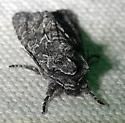
Xylena brucei Bruce’s Swordgrass Moth – Larvae feed primarily on Bitterbrush (Purshia tridentata). Adults emerge in the fall, overwinter and re-emerge in the spring.

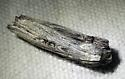
Cucullia albida is a rarely reported moth with Scotts Bluff being the southeastern most North American record. Little is known of its life cycle.
Phigalia plumogeraria Larvae are generalists, feeding on apples, plums, willows and Antelope Bitterbrush. Females are flightless, emitting pheromones to attract males who have plumose (feathery) antennae they use to follow the pheromone to its source. Unfortunately the antennae of Colin’s specimen are hidden from view under its wings. After completing the larval stages the larvae drop to the ground and pupate in the soil where they overwinter. Adults emerge in the spring to start the cycle again.


Egira crucialis Larvae feed on a wide variety of woody plants including Antelope Bitterbrush. Most records are from the Pacific Coast states with Colin’s Scotts Bluff County find being North America’s easternmost. Adults can be found in early spring.


Egira simplex Larva feed on various hardwoods and conifers. This moth flies in early spring and is uncommon to rare east of the Pacific Coast states.
Drasteria inepta Information on the early stages is lacking. Adults are bivoltine, flying in early and late summer.


One characteristic all these moths share is that they are all spring fliers. Most moths “newly reported” for Nebraska tend to be obscure “micro-moths” but all of these are larger but had escaped notice due to their early flight period. There are still discoveries to be made in our great state so start checking your lights as the temperatures warm.
Great work. Thank you.